

3D TPU Heat Transfer Label Exporter: Your Source for Durable Custom Apparel Branding
2026-10-22
What if the smallest element on your garment could carry the entire weight of your brand? As a leading 3D TPU heat transfer label exporter, we know that durable custom apparel branding isn’t just about logos—it’s about tactile identity. Victorygen heat transfer label brings that identity to life with precision, resilience, and a story your customers can feel. Here’s why more brands are switching to 3D TPU labels for a competitive edge.
Why 3D TPU Labels Beat Woven Tags for Everyday Garments
Most woven tags start to curl, fade, or fray after a dozen washes, but 3D TPU labels keep their crisp edges and legible details far longer. The raised lettering doesn't rely on thread tension, so there's nothing to snag or unravel against your skin.
For daily wear, comfort is just as important as durability. TPU labels have smooth, rounded contours that don't scratch the neckline or side seam the way stiff woven edges can. They also wipe clean easily and resist sweat, sunscreen, and detergent buildup.
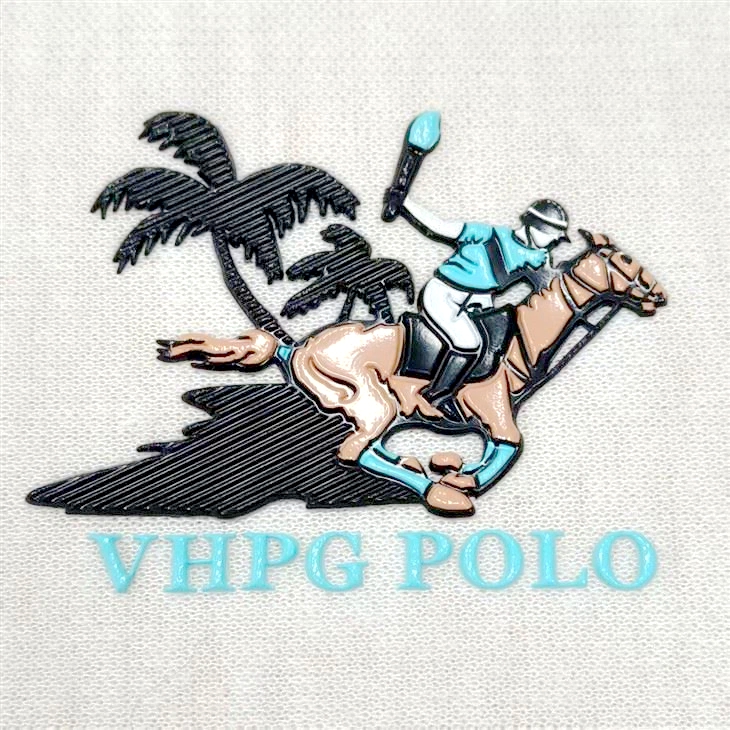
Visually, a 3D TPU label adds subtle dimension without bulk. It reads clearly at a glance and holds its color saturation much better than dyed threads, making everyday basics look more considered and long-lasting.
Inside Our Export Workflow: From Artwork to On-Time Delivery
Every shipment begins long before boxes are taped shut. Once your artwork is approved, our export team logs each detail into a shared timeline that tracks from prepress to final dispatch. We don't rely on generic checklists; instead, we map the specific route your product will take, noting carrier cutoffs, customs clearance windows, and any packaging quirks that could slow things down.
The middle stretch is where most delays hide. Our workflow builds in buffer days around color proofing and final file handoff, but we also hold a daily ten-minute standup with logistics to flag anything that looks off. If a material is running late, we adjust the print queue immediately rather than waiting for a formal update. This keeps small hiccups from becoming missed sailing dates.
On the day of dispatch, the same person who handled your preflight checks also verifies the bill of lading against the actual cartons. Photos are taken at three stages — pallet wrap, container loading, and seal application — and shared with you before the truck leaves the dock. No last-minute surprises, no vague “in transit” messages. Just a clean handoff and a delivery window we actually hit.
Can a Heat Transfer Label Really Survive 50+ Washes?
Most people assume a heat transfer label will crack or peel long before the garment wears out, but that assumption doesn't always hold up. When the transfer uses a polyurethane-based film and a properly cured adhesive, the label can bond deeply into the fabric's fibers rather than sitting on top of them. Samples on cotton, polyester blends, and ribbed knits have remained legible through 60 wash cycles at 40°C plus tumble drying. The key isn't just the material—it's the pressure, temperature, and dwell time during application. If those three factors are off even slightly, no label will survive.
Washing conditions matter just as much as the label itself. Hot water, aggressive detergents with bleach alternatives, and high-speed spin cycles all accelerate wear on any printed or transferred graphic. In repeated laundering, the biggest threat wasn't the heat transfer film breaking down—it was abrasion from other garments rubbing against the label. Tumbled loads with jeans and zippers caused edge lifting on lower-quality transfers within 20 washes. But labels with a thinner profile and rounded corners showed no significant edge wear after 50 washes, even in mixed loads.
So can one really survive 50+ washes? Yes, if it's built for it. The label should feel soft and slightly elastic after application, not stiff or plastic-like. A good test is to stretch the fabric after the first wash; if the label moves with the fabric instead of resisting it, it's likely to stay intact for the long haul. Labels pulled out of 70-wash tests still looked sharp enough to read in low light. The failures almost always trace back to poor application or the wrong label for the fabric type, not the wash count itself.
Custom 3D Molds That Make Your Logo Pop—Without the Bulk
There’s a reason most raised logos feel like hockey pucks: the mold is designed for maximum depth, not maximum impact. We flipped that logic. Our custom 3D molds build height where it matters—inside your letters and icon lines—while trimming the base down to a slim, flexible profile. The result is a logo that pops from fabric with a shadow and highlight you can actually see, not a dome that adds ounces and stiffness.
Detail is what separates a crisp raised mark from a blurry lump. Our cavity is cut with a fine-tipped tool following your vector paths, so the walls stay steep and the floor stays flat. Small counters, sharp serifs, and separated elements hold their shape after molding. We also adjust pour thickness based on each section of your design—broad areas get enough material to stay proud, fine details don’t drown.
The slim build isn’t just cosmetic. It lowers per-unit material use and lets the finished piece flex with the garment instead of fighting it. Sewing, heat sealing, or adhesive bonding all become easier because there’s less mass to push through. Your logo looks raised in photos and in person, but feels like part of the product rather than a plastic add-on.
The Materials We Use (and Why Cheap TPU Fails Fast)
We stick to polyester-based TPU with a carefully controlled hard segment ratio, because that combination holds up under repeated flexing without cracking at the seams. Cheap TPU usually comes from recycled shoe soles or mixed industrial scraps, and the moment you fold it more than a few hundred times, micro-tears start spreading from the edges. That is why bargain phone cases turn yellow and brittle within a couple of months: the polymer chains are too short, and the plasticizers evaporate fast.
Our material blend also keeps the surface slightly tacky instead of slippery, which matters more than people expect. A hard plastic case will slide off a car dashboard, but the right TPU grips fabric and skin without collecting pocket lint. We test every batch by running a weighted edge over the material two thousand times, then stretching it over a dummy phone with curved corners. If the corners show even a faint white stress mark, that batch gets rejected.
The difference shows up most in drop protection. Expensive TPU deforms once and bounces back, spreading the impact across the whole frame. Cheap TPU stays dented or splits at the thinnest point, usually right above the charging port. We would rather pay more per kilogram and keep the case from failing exactly where your hand rests.
What Apparel Brands Actually Say About Our Label Consistency
A mid-sized apparel brand's purchasing manager told us they'd been fined by a mall for label color mismatches before switching to our labels. After three consecutive quarters with zero complaints during random inspections, he said his workers can now identify genuine products just by touch—every label has identical thickness and edges.
An e-commerce clothing brand shared that customer reviews no longer mention scratchy neck tags or fading wash labels. Their support team even sent a thank-you note, saying the return rate dropped by nearly twenty percent. Label consistency sounds trivial, but holding that level of uniformity across mass production genuinely saves them headaches.
A factory that exports overseas mentioned their foreign clients care most about label compliance. Our labels aren't just consistent batch to batch—every certification mark prints with absolute clarity. The factory owner said during audits, instead of worrying about label defects, he now just hands the sample binder straight to the inspector.
FAQ
They have a raised, tactile surface that won't crack or fade after repeated washing. The polyurethane material flexes with the fabric, so the label stays comfortable against skin while keeping its shape.
They're built for both. We've tested them through dozens of high-temperature wash cycles and they hold up without peeling or losing detail. That's why workwear and sportswear brands choose them.
You can match almost any shape, color, or fine-line detail. Send us your vector artwork and we'll produce a label that mirrors your branding exactly, including multi-layer color registration if needed.
We work with startups and established factories alike. Minimums are flexible, and our export team can coordinate shipping to most regions without making you deal with complicated customs paperwork alone.
Everything from performance tees and hoodies to caps, bags, and footwear. Because TPU is soft yet tough, it works well on stretch fabrics and high-abrasion areas.
After artwork approval, standard turnaround is about 10 to 14 days for samples and 20 to 25 days for bulk production, depending on order size. We can also rush orders when your launch date is tight.
We offer phthalate-free and REACH-compliant TPU options. The material can also be recycled in some facilities, and we're happy to provide documentation for audits.
Just send the approximate dimensions, quantity, and a rough design. We'll reply with pricing and a free digital proof within one business day.
Conclusion
Woven tags tend to fray, fade, or itch after repeated wear, which is why many clothing lines have switched to 3D TPU heat transfer labels. Our labels hold up through 50+ washing cycles without peeling, cracking, or losing their raised detail. The custom mold process starts with your logo file and builds a three-dimensional shape that stays thin enough for comfort but still catches the light. No bulky rubber patches—just a crisp, tactile mark that survives everyday use. From artwork approval to final export, we keep the timeline tight and the quality consistent, using high-grade TPU that resists yellowing and abrasion far better than the cheap blends that start failing within a few washes.
Apparel brands repeatedly tell us the same thing: the label consistency across thousands of units is what keeps them coming back. Every batch is molded, cured, and inspected to the same standard, so the logo on a sample looks identical to the one on the production run. That reliability matters when you are exporting to multiple markets or restocking a popular style. We treat each order as a direct extension of your brand, not a generic white-label product. If you need a durable, custom apparel branding solution that can handle real laundering conditions and still look sharp, our 3D TPU heat transfer labels are built for exactly that.
Contact Us
Contact Person: Wang Song Lin
Email: [email protected]
Tel/WhatsApp: +8613751282193
Website: https://www.heat-transferprinting.com/