

China Industrial Air Conditioning: Essential Insights for Facility Managers
2026-10-19
China’s industrial cooling sector is evolving faster than most facility managers realize—and the choices you make today could reshape your plant’s efficiency for years. From extreme climates to tightening energy regulations, the landscape demands more than a standard spec sheet. That’s where Tongbaote enters the conversation, offering insights that bridge local manufacturing realities with global performance standards. In this post, we'll unpack the critical factors every facility manager should weigh before investing in Chinese industrial air conditioning.
The Guangdong Factor: Why Plant Location Shapes Your Equipment's Future
Place your equipment manufacturing in Guangdong and the difference starts on day one, though few buyers fully grasp why until their machines are already on the water. The province is not merely a spot on the map; it is a dense, reactive web of workshops, mold makers, component suppliers, and finishing shops that have spent decades learning to move at the pace of global demand. Your equipment's future gets shaped here by forces you cannot replicate in a low-density industrial zone: a supplier can re-cut a faulty bracket overnight, a plating line can run a trial batch before lunch, and an engineer from a neighboring factory may solve a tolerance problem that your own drawings never flagged. That immediacy becomes part of the machine you eventually install, even if it never shows up on a spec sheet.
The second way location matters is less obvious but often more costly: Guangdong's ecosystem drives a certain obsolescence curve. Because so many competing lines, retrofits, and automation upgrades happen within a short radius, the baseline for what counts as “current generation” moves faster here than elsewhere. When you source equipment from a plant embedded in this environment, you inherit that tempo: the electrical cabinets are wired with connectors that are still in circulation, the PLC logic reflects recent field failures rather than old textbook examples, and spare parts are drawn from a supply pool that refreshes continuously. Choose a factory located far from this cluster, and you may get a perfectly functional machine, but one whose design assumptions quietly age against a slower backdrop, leaving you to discover the gap only when a retrofit quote or a downtime event forces the issue.
Finally, plant location shapes the future in terms of adaptation. Equipment built in Guangdong tends to carry a certain modularity born of necessity: factories here often reconfigure lines for new models, new voltages, or new safety standards within weeks, not quarters. That habit gets baked into the frames, fastener choices, cable routings, and even the software structure. Years later, when your production needs shift, a machine from this region is more likely to accept a new feeder, a different gripper, or an updated control module without requiring a custom fabrication project. It is not that Guangdong machines are universally better; it is that the choices made at the design stage reflect an environment where change is the only constant, and that bias travels with the equipment long after it leaves the port.
GB Standards Aren't Just Paperwork: They Affect Your Power Bill
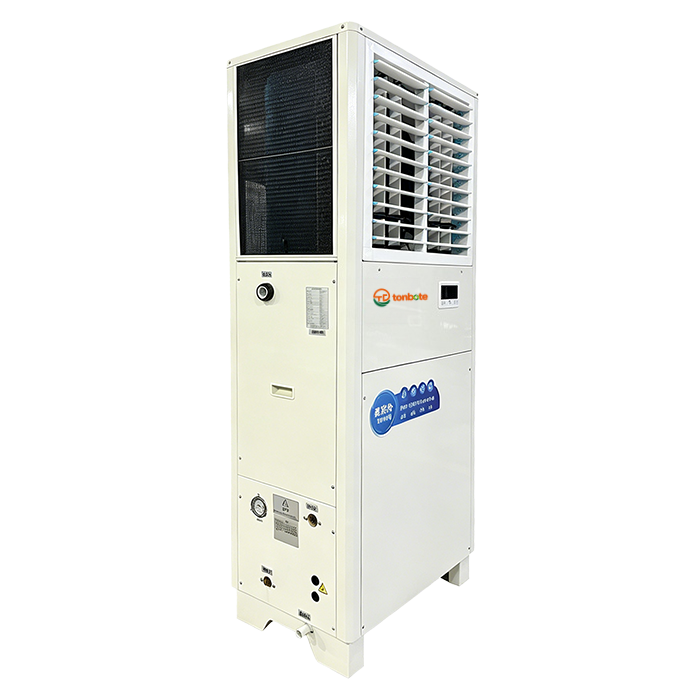
Most people picture dusty binders and bureaucratic checklists when they hear “GB standards.” But tucked inside those technical documents are hard limits on how much electricity your appliances can quietly sip while you sleep. A refrigerator compressor cycling too often, a television that never truly turns off, a phone charger left in the wall doing nothing — each of these tiny draws is regulated. When a product meets a stricter GB efficiency tier, it often means the difference between a monthly bill that feels accidental and one you can actually predict.
The real impact shows up in the kitchen and laundry room. Induction cooktops, inverter air conditioners, and heat-pump dryers that carry higher GB energy labels don't just cost less to run — they shift how you use power throughout the day. A washing machine that heats water only to 40°C instead of 60°C because the standard requires better detergent dissolution? That's a smaller heating element working for fewer minutes, every single week. Over a decade, the compounding effect on your electricity meter is far from trivial.
There's a quieter side too: standby power. GB 24850 and similar rules cap how many watts a set-top box or computer monitor can consume while appearing off. Without those ceilings, manufacturers compete on features, not frugality. If your home has ten devices each sipping three watts around the clock, that's over 260 kilowatt-hours a year — enough to run a modern fridge for two months. So the next time you see a GB mark, remember it's not a rubber stamp. It's a quietly enforced promise that your wall outlet won't leak money while you're not looking.
Remote Vetting Tactics That Reveal a Factory's True Process Control
Instead of accepting staged tours, push for unscripted live walkthroughs where the camera follows raw material from receiving to dispatch. Ask the guide to stop at random workstations and have the operator walk through the current job, including how they would react to an out-of-spec measurement. The hesitations and detours are often more revealing than the polished overview.
Pair that with real-time document pulls. Request an actual batch record or control chart from last week, not a sample file. Have them log into the production system over screen share and navigate to the live SPC data. If they cannot find a nonconformance report or corrective action record within a minute or two, that is a signal the system exists more on paper than in daily use.
Probe the edges of changeover and traceability. Ask for a component trace from a finished serial number back to its raw material lot, and watch how long it takes. Then ask what happens on the floor when a tool wears past its control limit mid-shift. Strong process control shows up in the small, unglamorous details: who gets notified, how the suspect parts are quarantined, and how the adjustment is documented.
Refrigerant Transitions in China: Asking the Right Questions Before Procurement
China's refrigerant landscape is shifting faster than many procurement teams realize. The phase-down of high-GWP hydrofluorocarbons under the Kigali Amendment, combined with domestic policies like the dual carbon goals, means that a refrigerant choice made today could face supply restrictions or price volatility within a few years. Before signing off on a purchase order, it's worth asking whether the proposed refrigerant has a clear regulatory runway in China over the next five to ten years. Some options that look cost-effective now may become scarce or heavily taxed, forcing an expensive retrofit later.
Beyond compliance, the right questions should dig into equipment compatibility, servicing infrastructure, and actual performance under local operating conditions. A refrigerant that works well in a temperate climate may struggle in the humid, high-ambient conditions common across southern China. Ask suppliers for verified performance data in similar environments, not just nominal ratings. Also check whether local technicians have access to the necessary training, recovery equipment, and spare parts. A smooth transition depends on the whole system, not just the refrigerant itself.
Finally, procurement should consider total lifecycle cost rather than initial price. Lower-cost refrigerants can carry hidden expenses through lower efficiency, higher leak rates, or shorter equipment life. Request transparent data on energy consumption, leak potential, and expected maintenance intervals. Engaging with suppliers who can provide long-term supply guarantees and take-back programs can reduce risk. In China's fast-evolving market, asking these questions early can prevent stranded assets and keep operations running without interruption.
After-Sales Support in China's Industrial Belts: What to Expect Outside Shanghai
When sourcing from industrial clusters like Dongguan, Ningbo, or Foshan, buyers often discover that after-sales support operates on a different rhythm than what Shanghai's polished service centers might suggest. The reality is less about dedicated call centers and more about direct lines to factory engineers who know the product inside out. Expect quick, practical fixes—often via video call or WeChat—rather than formal ticketing systems. But response speed can vary wildly depending on order volume and your relationship history.
Outside Shanghai, repair and replacement logistics hinge on local courier networks and the factory's own workshop capacity. Smaller suppliers might rely on third-party repair shops in nearby towns, which means turnaround times stretch from days to weeks. Smart buyers negotiate clear after-sales terms upfront: who covers return shipping, what counts as a defect, and how warranty claims are processed. Many factories prefer sending replacement parts over full units, especially for machinery or electronics.
One overlooked advantage is the informal knowledge network. Local trade associations and factory clusters often share after-sales resources—if one supplier can't fix a fault, a neighboring workshop can. Building a direct relationship with a production manager often yields better support than going through a sales rep. The key is to set expectations early, test their response during small orders, and keep communication concise but documented.
Where Local Chinese AC Outperforms Imported Alternatives: Cold Storage and Clean Rooms
In cold storage facilities across China, locally manufactured air conditioning and refrigeration units have gained a clear edge over imported systems. This is not simply a matter of lower price. Domestic manufacturers have spent years adapting their designs to the realities of Chinese cold chain operations: frequent door openings, high ambient humidity, dusty rural environments, and voltage fluctuations in older industrial parks. Many local units now come standard with rapid defrost cycles that recover temperature faster after loading, corrosion-resistant condenser coatings for coastal and high-humidity regions, and control boards tolerant of wide input voltage ranges from 180V to 420V. Imported alternatives, while precise, often require additional voltage stabilizers and custom defrost programming to match this performance, adding both cost and commissioning time.
Clean room air handling presents a similar pattern. Chinese pharmaceutical and electronics manufacturers increasingly demand tight temperature and humidity control, but they also need quick modifications during facility upgrades. Local AC suppliers have built flexible production lines that can adjust fan curves, filter housing dimensions, and PLC logic within weeks, not months. Their engineers frequently visit sites to fine-tune airflow distribution for laminar zones or to integrate with existing BMS systems using Modbus or BACnet protocols common in Chinese factories. Imported clean room AC systems, on the other hand, tend to be more rigid in configuration, and spare parts can take several weeks to arrive from overseas. A failed humidity sensor or a damaged VFD can halt a clean room production line; local service teams often stock these components in provincial warehouses and can respond the same day.
Energy efficiency and total cost of ownership also favor local solutions in these specialized segments. For cold storage, domestic manufacturers have developed high-efficiency scroll and screw compressors with IPLV values that exceed many imported models when operating at partial load, which is the typical condition for warehouses that are not always at full capacity. For clean rooms, local suppliers offer EC fan wall options and heat recovery configurations that are tailored to China's electricity pricing structure, including peak and valley tariffs. These refinements, born from thousands of installed projects rather than catalog engineering, explain why an increasing number of cold storage operators and clean room managers simply specify a local brand as the baseline, with imported equipment reserved only for niche applications where specific certifications override practical considerations.
FAQ
The biggest difference is the sheer range of customization available at scale. Chinese manufacturers often build units around specific voltage, footprint, and ambient conditions without long lead times. You'll see more modular designs that can be reconfigured as production lines change, and the domestic supply chain keeps component replacement relatively straightforward. However, that also means you need to specify requirements precisely upfront, because off-the-shelf assumptions from Western or Japanese designs don't always carry over.
GB 19577 and GB 37479 are the two worth knowing. GB 19577 covers minimum allowable values of energy efficiency and energy efficiency grades for chillers, while GB 37479 applies to unitary air conditioners. Many Chinese provinces now push for Grade 1 or Grade 2 units in new industrial projects, so checking the energy efficiency grade plate before purchase can affect both compliance and operating cost. Also, some municipal incentive programs tie subsidies to the integrated part load value (IPLV), not just the rated EER.
Coastal plants in Guangdong, Fujian, or Hainan face salt spray and relentless humidity, so standard units often fail early if they lack anti-corrosion treatment on condenser coils and cabinet joints. You want to ask for hydrophilic coated fins, epoxy-coated coil headers, and stainless steel fasteners as a baseline. For humidity, look for units with wider sensible heat ratio flexibility and reheat options, because overcooling to strip moisture can drive energy waste. Some domestic manufacturers offer custom dehumidification logic tied to dew point sensors, which works better than fixed setpoint cycling.
The biggest one is treating them like commodity rooftop units. Many Chinese industrial units use inverter-driven compressors and electronic expansion valves that need clean power and regular firmware checks. Skipping condenser coil cleaning in high-dust environments is another common issue, especially in textile, cement, or metalworking plants. Filter monitoring should be pressure-based, not time-based. Also, don't ignore the unit's communication board faults—sometimes a minor sensor error gets dismissed, but it can cause the system to run at fixed speed and lose all efficiency gains.
For most applications, yes, but you have to select the right tier. The top five or six domestic brands—like Gree, Midea, Haier, Dunham-Bush, and TICA—have dedicated industrial lines with strong service networks in China. They handle process cooling for data halls, pharmaceutical cleanrooms, and automotive paint shops. The key is to verify that the specific model has a service track record in your industry, not just a strong residential reputation. Ask for reference sites with similar dust load, ambient temperature, and runtime hours. Avoid unbranded or white-label units for anything that cannot tolerate downtime.
Voltage and frequency mismatches are still the most common issue. Many domestic units are optimized for 380V/50Hz, and while export models exist, the control transformers and inverter settings need verification for 460V/60Hz or other local grids. Packaging for sea freight is usually adequate, but internal piping can shift if the unit is trucked long distances over rough roads. Plan for extended commissioning time because you'll want to re-tighten electrical connections, check refrigerant charge, and recalibrate sensors after transport. Also, make sure the local installer has access to the original manufacturer's commissioning checklist, not a generic startup sheet.
Start with the compressor and fan motor efficiency at expected part-load, not just full-load rated EER. Chinese units often have a lower first cost, but their part-load performance can vary widely depending on the inverter logic and heat exchanger sizing. Factor in spare parts availability in your region, because even a well-built unit will eventually need a proprietary control board or sensor. If the manufacturer cannot confirm regional parts stock or a service partner, add downtime risk to the calculation. In China itself, maintenance labor is relatively cheap, but outside China the labor saving can be offset by logistics delays. A practical approach is to ask for three years of energy and maintenance data from a reference site with similar operating hours.
Conclusion
Facility managers evaluating industrial air conditioning in China often overlook how deeply location shapes long-term equipment viability. A plant in Guangdong, for instance, contends with relentless humidity and salt air that accelerate corrosion in ways a factory in inland Hebei never faces. This isn't merely a maintenance footnote; it dictates whether an imported unit's coil will last five years or fifteen. Equally consequential are GB standards, which many foreign buyers dismiss as bureaucratic red tape until their electricity meter tells a different story. A chiller tuned to China's specific voltage tolerances and energy efficiency grading can cut operating costs substantially compared to a non-compliant overseas model running at the edge of its design envelope.
When sourcing remotely, the difference between a polished showroom and genuine process control lies in asking for unscripted video walkthroughs, raw QA logs, and serial-number traceability, not marketing brochures. Refrigerant transitions add another layer: with R32 and R410A phase-down timelines varying by province, procurement teams must verify a manufacturer's actual retrofit readiness, not just their catalog claims. Outside Shanghai, after-sales responsiveness drops sharply unless you contract with a local service partner embedded in the industrial belt. Meanwhile, for cold storage and clean rooms, domestic Chinese systems frequently outperform imported alternatives because local engineers optimize for rapid pull-down, humidity precision, and parts availability in ways global brands rarely match. The takeaways are clear: treat geography as a design input, treat standards as cash flow levers, and vet suppliers like a forensic auditor rather than a tourist.
Contact Us
Contact Person: Wanshu Chen
Email: [email protected]
Tel/WhatsApp: +86-13662871206
Website: https://www.mbcee.com