

Commercial Energy HVAC System Manufacturer: Expert Solutions for Efficient Climate Control
2026-09-18
Keeping a large commercial space comfortable without watching energy costs spiral is a challenge many facility managers know too well. The right HVAC system does more than heat or cool—it shapes operational budgets, indoor air quality, and long-term sustainability goals. That’s where Tongbaote comes in as a commercial energy HVAC system manufacturer focused on expert solutions for efficient climate control. Rather than offering one-size-fits-all units, Tongbaote engineers systems around real building loads and usage patterns, helping businesses cut waste while maintaining stable comfort. In this post, we’ll look at what separates energy-smart HVAC design from conventional setups and why manufacturer expertise matters more than ever.
Precision-Engineered Climate Systems Built Around Your Facility
Your facility isn't a stock template, so why settle for climate control that behaves like one? We map every square foot of your operation before a single unit is selected, factoring in ceiling height, heat-producing machinery, airflow obstacles, and even how your teams move through the space. That means no oversized units short-cycling their way to early failure, no cold spots where precision work happens, and no wasted energy fighting a layout that was never considered.
The result is a system that feels less like an add-on and more like a natural extension of your building. Duct runs hug structural beams instead of fighting them. Condensing units sit where maintenance can reach them without a ladder and a prayer. Even the control logic is tuned to your shift patterns, ramping down when the floor clears and catching up before the first worker walks in. It's climate control that respects the rhythm of your business.
What you won't get is a glossy brochure promise that evaporates on day one. You'll get submittal drawings that match what's actually installed, a commissioning report with real measured values, and a system that holds temperature within a degree or two — not because we claim it, but because the math was done right the first time.
Cutting Energy Waste Without Sacrificing Occupant Comfort
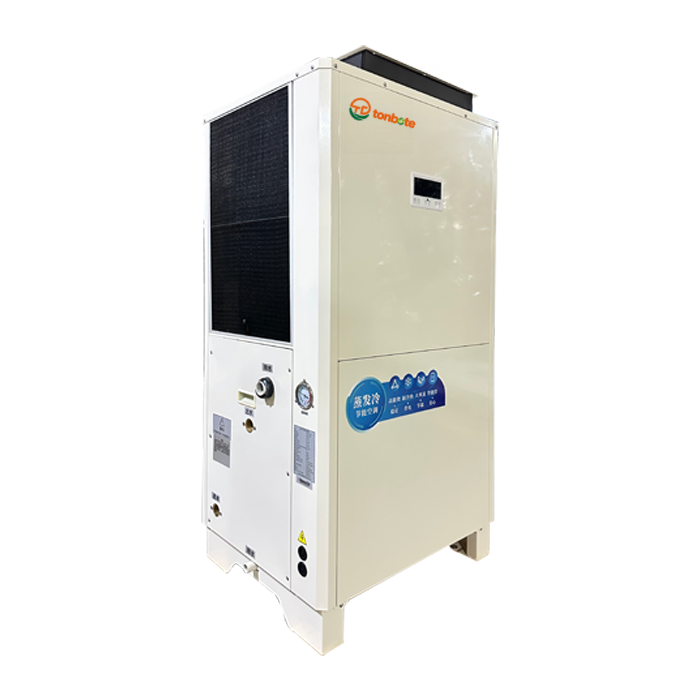
Most energy-saving efforts fail the moment they ask people to endure a stuffy office or a chilly conference room. The better route is to stop conditioning spaces that aren't being used. Instead of imposing building-wide temperature setbacks at arbitrary times, modern controls can follow actual badge swipes, desk sensors, or room bookings. A floor that empties at 4:30 p.m. on Fridays can start drifting toward unoccupied settings then, while the handful of late workers on another floor keep full comfort until they leave. That kind of granular scheduling trims real kilowatt-hours without anyone touching a thermostat.
Ventilation is another quiet source of waste, especially when outside air is supplied at design rates to zones with only a few occupants. Demand-controlled ventilation using CO2 readings can scale back airflow in real time, keeping air fresh where people are and letting it relax where they aren't. Similarly, supply air temperature resets tied to outdoor conditions or actual cooling loads stop systems from overcooling just to meet an old setpoint. These adjustments happen in the background, so occupants notice no change in comfort—only the utility bill does.
Sometimes the biggest savings come from fixing what's already there. Drifting sensors, stuck dampers, and fouled coils force equipment to run longer and harder to hit the same comfort targets. A recommissioning pass that recalibrates thermostats, verifies valve positions, and cleans heat exchange surfaces can cut energy use by double digits without touching a single setpoint. When the plant runs as designed, waste disappears first, and occupant comfort becomes the baseline rather than the bargaining chip.
Smart Controls That Adapt to Real-Time Building Loads
Most buildings still run their HVAC and lighting on fixed schedules, which means they waste energy when occupancy drops or equipment loads shift unexpectedly. Smart controls change that by continuously reading data from sensors, meters, and even weather feeds, then adjusting setpoints, fan speeds, or lighting levels within seconds. The result isn't just lower utility bills—it's a building that feels more comfortable because the systems are actually responding to what's happening right now, not what someone predicted last week.
One of the quiet advantages of these adaptive controls is how they handle partial loads. Instead of running a chiller at full capacity when only a few zones need cooling, the system can stage equipment, trim airflow, or shift to free cooling if outdoor conditions allow. Over time, the control logic learns typical usage patterns and gets better at anticipating spikes, but it still checks real-time data to avoid the trap of assuming today will look like yesterday.
Maintenance teams also benefit because the controls flag when equipment is working harder than it should for the current load. That early warning often points to a failing sensor, a stuck damper, or a dirty coil before it turns into a comfort complaint or an emergency repair. In practice, smart load-adaptive controls turn building operations from a reactive chore into something closer to a continuous, low-effort tuning process.
From Retrofit Audits to Full-Scale Installation Support
Our process starts by walking through your existing setup room by room, not with a clipboard and a generic checklist, but with an eye for how the space actually breathes. We measure airflow at registers, inspect duct joints that have been settling for decades, and listen for the subtle rattles that tell us where the system is working against itself. That retrofit audit isn't a formality — it's where we discover the hidden leaks, the undersized returns, and the outdated controls that have been quietly driving your energy bills up.
Once we've mapped out the gaps, the conversation shifts from what's wrong to what's possible. You won't get a one-size-fits-all proposal. We walk you through options that fit your budget and your building's quirks, whether that means targeted sealing in a problem zone or a staged replacement that aligns with your operational calendar. Every recommendation is tied back to the specific readings and observations we made during the audit, so you can see exactly why a particular fix matters.
When it's time to move forward, our installation team doesn't hand off to a different crew with a vague set of notes. The same technicians who performed your audit often return to handle the work, bringing their firsthand knowledge of your system's weak points. We schedule around your downtime, protect finishes, and test the upgraded system under real load before we call the job done. After installation, you get a plain-language summary of what changed and how to verify the improvements with your own eyes — no jargon, no loose ends.
Keeping Large Commercial Spaces Comfortable Year-Round
Maintaining comfort in large commercial buildings is less about a single thermostat setting and more about managing how air moves, where heat builds up, and how different zones respond to daily use. Open lobbies, conference rooms, storage areas, and office floors all have distinct thermal loads, so a uniform temperature often leaves some areas stuffy while others feel cold. Effective year-round comfort starts with zoning the HVAC system to match occupancy patterns, adjusting airflow so that high-traffic areas get consistent circulation without overcooling empty corridors. Adding variable speed fans and modulating dampers helps balance temperature swings between morning startup and afternoon peak loads, reducing hot and cold spots even when outside conditions shift suddenly.
Beyond equipment, the building envelope and routine maintenance play a quiet but critical role. Sealing loading dock doors, upgrading vestibule weather stripping, and checking insulation on rooftop ductwork keep conditioned air from leaking out before it reaches occupied spaces. Seasonal transition months are often the hardest, when one side of the building faces direct sun and the other stays shaded. Using predictive controls that factor in outdoor temperature, humidity, and internal heat from lighting and equipment lets the system respond before spaces become uncomfortable. Regularly calibrating sensors and cleaning coils prevents drift that leads to overworked compressors and uneven humidity. The goal is not a single perfect number on a thermostat, but steady, low-effort comfort that adapts to how the space is actually used, month after month.
A Manufacturing Partner That Treats Efficiency as a Design Requirement
Efficiency is not an afterthought bolted onto our production lines — it is baked into the geometry, materials, and assembly logic of every component we ship. When we take on a manufacturing project, the first question is never “how fast can we run this job?” but “where is the waste hiding in the design itself?” That means scrutinizing wall thicknesses for cooling time, rethinking fastening methods to eliminate secondary operations, and selecting alloys that machine cleanly without sacrificial passes. The result is a part that arrives faster not because we pushed harder, but because we designed the friction out before the first tool touched metal.
This design-first efficiency shows up in unexpected places. A bracket we produced for an industrial robotics firm originally required six separate setups and a hand-deburring stage. By working with their engineering team to move a mounting flange three millimeters and switch to a self-fixturing geometry, we cut the process to two setups and removed the manual step entirely. Cycle time dropped forty percent, scrap nearly vanished, and the customer’s per-unit cost fell below what their previous supplier had quoted for the original design — no exotic equipment, just fewer chances for things to go wrong.
What this means for you is a manufacturing partner that measures itself by the elegance of the entire process, not just the speed of the spindle. We audit every design for unnecessary complexity before quoting, flag changes that would save hours downstream, and treat lead time as a variable we can design away rather than a fixed penalty to be absorbed. If your current vendor tells you efficiency is about running machines hotter, we will show you why it is really about running fewer steps, wasting less material, and shipping a part that was born optimized.
FAQ
The main difference comes down to how the system handles partial loads and recovers energy. Instead of running at full capacity all the time, these units use variable speed compressors, heat recovery wheels, and smart sequencing to match real-time demand. That means less cycling, lower peak demand charges, and a noticeable drop in operating costs.
We start with a detailed load profile rather than a rough rule-of-thumb calculation. By looking at occupancy patterns, equipment heat gains, and local weather data, we can select or configure equipment that operates in its most efficient range for the majority of the year. Avoiding oversizing is often the single biggest efficiency win.
Yes, they are designed for open communication using standard protocols like BACnet, Modbus, and LonWorks. That allows facility teams to monitor setpoints, schedules, and alarms from their current front-end without being locked into a separate proprietary platform.
Heat recovery is treated as a core component, not an add-on. Waste heat from exhaust air or the condenser side can be redirected to preheat incoming ventilation air or domestic water. In cooler climates this alone can reduce heating energy use by a noticeable margin while keeping the cooling side running smoothly.
We separate latent and sensible loads whenever possible. A dedicated outdoor air system with an energy recovery wheel or desiccant rotor removes moisture before it enters the main air handler. That allows the primary cooling equipment to focus on temperature only, which prevents the cold and clammy feeling you get from trying to dehumidify by overcooling.
They are generally lighter than older constant-volume systems. Variable speed drives reduce mechanical stress, and remote monitoring can flag issues like filter loading or refrigerant drift before they become failures. Most routine work is limited to filter changes, coil cleaning, and occasional sensor calibration.
Yes, we frequently work with constrained mechanical rooms and existing ductwork. Modular cabinet designs and split configurations let us stage equipment into spaces where a single large unit would not fit. We also pay attention to electrical service limitations, offering options that avoid costly switchgear upgrades.
We use submetering tied to a performance dashboard that compares actual consumption against a pre-retrofit baseline normalized for weather. Facility managers can see daily and monthly trends, and for larger projects we support third-party measurement and verification following industry protocols.
Conclusion
A commercial HVAC manufacturer shouldn't just ship equipment—it should engineer climate systems around the actual footprint, thermal loads, and daily rhythms of a facility. That means treating efficiency not as a bolt-on feature but as a core design requirement from the first drawing. Precision-built units, matched to real building geometry, cut waste at the source. Smart controls take this further by reading occupancy patterns, outdoor conditions, and zone-level demand in real time, adjusting output so you never cool an empty boardroom or overheat a loading dock. This kind of tailored engineering keeps large commercial spaces genuinely comfortable all year, without the usual spikes in energy spend.
What sets a true manufacturing partner apart is the full journey: from detailed retrofit audits that uncover hidden inefficiencies, through to final installation and beyond. The goal is never to sacrifice occupant comfort on the altar of energy savings. Instead, the right equipment and control strategy strip out wasted kilowatts while holding temperature and humidity steady across every floor. Whether upgrading a single chiller plant or rolling out systems across multiple buildings, the result is the same—lower operating costs, fewer hot and cold complaints, and a climate system that quietly earns its keep.
Contact Us
Contact Person: Wanshu Chen
Email: [email protected]
Tel/WhatsApp: +86-13662871206
Website: https://www.mbcee.com