

Expansion Shell Bolt Factory: Inside the Manufacturing Process That Ensures Reliable Anchoring
2026-10-25
Most people never see the inside of an expansion shell bolt factory—until an anchor fails and they wish they had. At Supreme Machinery, failure isn't an option. This walkthrough of the manufacturing process shows how each bolt is turned, heat-treated, and inspected to deliver the kind of reliable anchoring that engineers trust on demanding job sites. Curious what separates a genuine load-bearing shell from a cheap imitation? The answer starts on the factory floor.
From Coil to Cone: How Raw Steel Shapes Up for the Shell
A flat coil of steel arrives at the press line looking nothing like the curved shell it will become. The first move is to feed the strip through a leveler, which takes out the memory of being wound tight for weeks. Once the sheet lies flat, a blanking die punches out a near-net shape, leaving behind a skeleton of scrap that gets baled and sent back to the mill.
The blank then slides into a deep-drawing press, where a punch forces the metal into a die cavity. This first draw creates a shallow cup, nowhere near the final depth. A second and sometimes third draw follow, each one pulling the walls thinner and taller, gradually coaxing the cone profile out of the steel. Lubricant is critical here—too little and the metal tears, too much and it wrinkles like a raisin.
After forming, the cone still carries a dull, oily surface and a rough edge around the rim. A trimming station shears off the uneven flange, then a roller spins the edge inward to remove sharpness. Finally, the shell passes through a series of abrasive belts and polishing wheels until the grain runs consistently from base to lip. What started as a coiled strip is now a rigid, smooth-walled cone ready for welding, coating, or assembly into the finished product.
Why Cold Heading Beats Cutting for Bolt Integrity
When you cut threads or shanks from bar stock, you sever the metal's internal grain structure. That creates abrupt stress raisers and weak points where fatigue cracks can start. Cold heading, by contrast, reshapes the metal at room temperature, forcing the grain to flow continuously around the bolt's contours. The result is a fastener that holds up far better under repeated loads.
There's also a difference in the surface. Cutting leaves tiny tears and tool marks that act as crack initiation sites; cold heading produces a smooth, work-hardened surface that resists both wear and corrosion. And because cold heading displaces material instead of removing it, you don't waste metal or compromise the shank's cross-section. For critical joints, that combination of continuous grain flow, better finish, and higher surface hardness is hard to beat.
The Heat-Treat Window That Makes or Breaks Anchoring Power
The heat-treat window that decides an anchor's holding power is tighter than most shops admit. It's not a single setpoint but a band of time and temperature where the steel shifts from brittle fresh martensite into tempered martensite with just enough residual stress to bite into concrete. Miss the low side by even 10 degrees or a few minutes of soak, and the shank stays too soft. Under pull-out load, it deforms instead of locking, and the anchor loses grip after a few thermal cycles. Go over the high side, and the carbides coarsen; the tip turns glass-hard and snaps during expansion, often before full torque is reached.
What separates a reliable heat-treat line from a guess is measuring the part's core temperature, not the furnace air. The real window starts the moment the entire cross-section reaches austenitizing temperature and ends when quenching begins, because any delay lets grain boundaries precipitate weak phases that quietly cut ultimate pull-out ratings. Anchors that pass a hardness test on the surface can still fail in the field if that internal soak was rushed. The difference shows up later as uneven clamping force, sudden shear in hard aggregate, or a shank that backs out under vibration—none of which can be fixed after the anchor leaves the oven.
Threads Under a Microscope: Rolling for Repeatable Torque
When you put a rolled thread under magnification, the surface tells a story that a cut thread rarely matches. Instead of sliced grain boundaries, you see material that has been pressed and flowed into shape. That cold-working leaves a denser, smoother crest and root, which matters when clamp load must stay predictable.
Repeatable torque starts with consistency in the thread's contact geometry. Rolled threads develop slightly rounded roots and burnished flanks, reducing the micro-galling and high spots that cause friction spikes. Under a microscope, those differences look subtle, but they change how the fastener reacts to the same applied torque from one joint to the next.
For applications where torque-to-tension scatter causes warranty issues, inspecting thread form at high magnification catches problems before they leave the line. A rolled profile that retains its as-formed texture and lacks torn crests will typically produce a tighter torque window than a cut thread with fractured surfaces. The microscope is where that repeatability becomes visible.
Coatings That Outlast the Concrete, Not Just the Warranty
Most coating warranties promise a decade, but the real question is simpler: will the film still be there when the slab beneath it begins to spall? Standard acrylics and urethanes fail exactly where concrete suffers most—at the edges, control joints, and areas of standing moisture. Once adhesion breaks there, the warranty rarely covers the full removal and reapplication cost. The smarter spec looks for coatings that form a chemical bond with the substrate, not just a surface skin. Moisture-cured polyureas and high-solids epoxies penetrate the paste layer and move with thermal cycling, so cracks in the slab don't telegraph straight through the coating.
That shift matters in places where downtime is expensive: loading docks, commercial kitchens, vehicle ramps. A floor coating that merely meets a warranty period often hides a hidden tax—repeated patch jobs, slip hazards from peeling flakes, and chemical exposure after the topcoat wears thin. By contrast, a coating engineered to outlast the concrete's first service cycle reduces long-term ownership cost below that of uncoated concrete, because it prevents chloride ingress and freeze-thaw damage from becoming structural problems. The warranty becomes secondary; the service record becomes the proof.
Field verification tells the same story. Cores taken from 20-year-old floors with penetration-grade primers show the coating still bonded at the interface while the top 2–3 mm of concrete powder away underneath. That's the benchmark to ask for: not a milestone in years, but a failure mode that starts in the concrete rather than in the coating. When the weakest layer is the concrete itself, you've specified a system that outlasts the slab, not just the paperwork.
Destructive Testing as a Daily Habit: Proof Over Promises
Most teams treat destructive testing like a fire drill—scheduled, rare, and slightly theatrical. Making it a daily habit changes the texture of your work. Instead of promising resilience in a design doc, you grab a staging instance every morning and try to kill it. The failures you trigger before lunch are the most honest feedback you'll get all day.
Proof over promises means your commit history is littered with deliberate breakages and their fixes. It's not enough to say the new caching layer will hold under load; you have to flood it until it coughs. When a colleague asks if the failover works, you don't point to a diagram—you show them the log from yesterday's forced crash. That evidence silences doubt faster than any whiteboard session.
The habit also reshapes how you prioritize. If something can't be rapidly broken and observed, it stays suspect. You stop celebrating features that merely look finished and start trusting only those that have survived repeated, intentional damage. Over time, your definition of "done" shifts from ship it to prove it survived.
FAQ
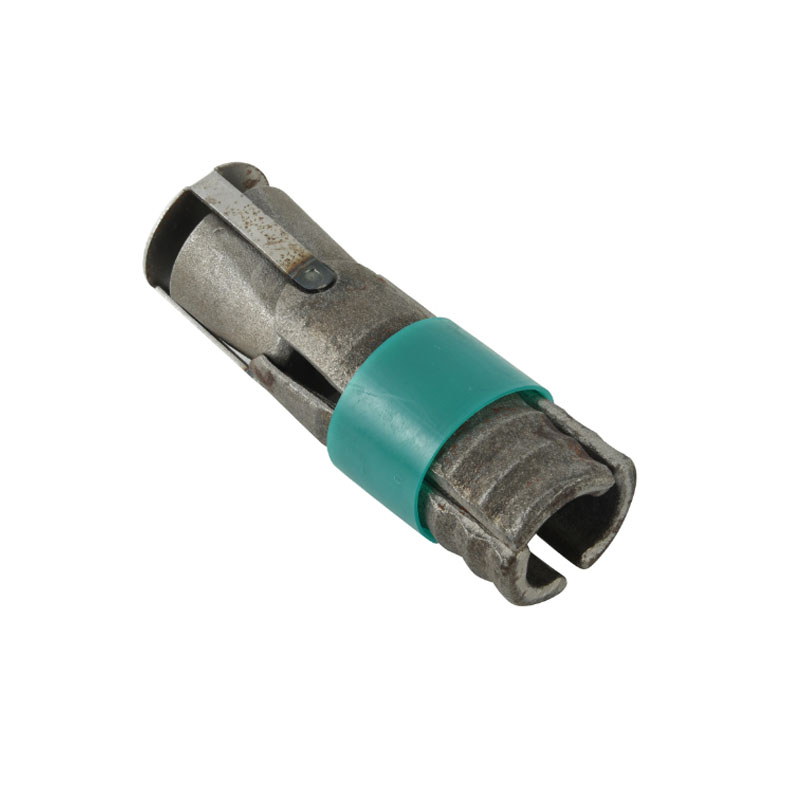
Manufacturing begins with high-grade carbon steel or stainless steel, selected for tensile strength and corrosion resistance. The shell is often made from a softer steel that can deform against the borehole wall, while the cone and bolt are hardened. This material contrast allows the shell to expand uniformly and grip concrete or rock without cracking the substrate, directly affecting pull-out resistance and long-term stability.
The shell is cold-formed or machined from a single piece, with longitudinal slots cut at precise intervals to create expandable leaves. These slots are deburred and calibrated so each leaf opens at the same torque threshold. The inner surface is tapered to match the cone angle, usually 6 to 8 degrees, ensuring a progressive outward force rather than sudden fracture of the base material.
Every batch undergoes hardness testing on the cone and bolt thread, dimensional checks with laser micrometers for shell wall thickness, and sample torque-to-expansion tests on concrete blocks. Non-destructive magnetic particle inspection is used to detect micro-cracks in the cone. Batches failing any test are segregated for rework, and final assemblies are serialized for traceability.
The cone angle controls the rate of radial expansion versus axial draw. If too steep, the shell expands too quickly and can split the rock or concrete; if too shallow, the bolt may slip under load. In production, the cone is turned on CNC lathes and measured with an optical comparator against a master gauge. Deviation beyond 0.1 degree triggers tool compensation or part rejection.
Manufacturers use a pull-test rig that replicates a drilled hole in concrete or rock with specified diameter and depth. The bolt is installed to a set torque, then a hydraulic ram applies increasing tensile load until failure. Load-displacement curves are recorded. Cyclic tests with vibration and thermal cycling are also done on a sample basis to ensure performance under dynamic loads like machinery or seismic events.
Common treatments include zinc electroplating, hot-dip galvanizing, or a proprietary polymer coating. Zinc plating provides moderate corrosion protection and reduces friction between the cone and shell, making torque values more predictable. Galvanizing adds thickness, requiring slight oversizing of threads in production. The polymer coating acts as a dry lubricant and seals micro-pores, preventing moisture ingress that could cause rust-jacking and premature loosening.
Automated cold-heading machines stamp the bolt head and thread rolling is done by CNC thread rollers that maintain pitch diameter within microns. Shell slotting is performed by laser cutting, eliminating variations from saw blades. Automated assembly presses insert the cone into the shell with a preset force, ensuring identical pre-load in every unit. This reduces the scatter in torque-tension relationships that plagues hand-assembled anchors.
Conclusion
The production floor of an expansion shell bolt factory begins not with shaped parts but with raw steel coils, which are drawn, sheared, and progressively formed into conical shells. Cold heading then hammers the bolt heads and shoulders into place, a process that preserves the metal's grain flow and yields far greater fatigue resistance than cutting from bar stock. This early stage sets the tone: every deformation must be controlled, because the shell's ability to grip the borehole depends on how evenly the cone expands under load. The heat-treating step is equally unforgiving—too short a soak or a few degrees off in tempering and the bolt turns brittle or soft, losing the very anchoring power it was designed to deliver.
Once hardened, threads are rolled rather than cut, a choice that compresses the steel surface and produces consistent torque-tension relationships batch after batch. Coatings are applied not merely for appearance but to survive aggressive concrete environments, often outlasting the warranty period by years. Perhaps the most telling habit is destructive testing performed daily: sample bolts are pulled to failure, confirming that every lot meets the specified load before it leaves the dock. This refusal to trust the process on faith, combined with tight controls at each stage, is what separates a dependable expansion anchor from a gamble.
Contact Us
Contact Person: Paul
Email: [email protected]
Tel/WhatsApp: 8615067447509
Website: https://www.spironcasting.com