

Halogen-Free Flame Retardant Exporter and Supplier: Essential Insights for Global Procurement
2026-09-20
Sourcing halogen-free flame retardants across borders often means juggling inconsistent specs, shifting regulations, and suppliers who overpromise. Whether you're securing materials for electronics, construction, or automotive applications, the margin for error is thin—and the cost of a wrong batch can ripple through your entire supply chain. That's where X.X.F.R comes into view. In this guide, we're breaking down what global procurement teams actually need to know before committing to a halogen-free flame retardant exporter and supplier.
What Spec Sheets Leave Out About Halogen-Free Flame Retardants
Spec sheets for halogen-free flame retardants typically list the basics: loading percentage, UL 94 rating, thermal stability range, and maybe a moisture absorption figure. What they rarely reveal is how the additive behaves during actual compounding, especially under high-shear conditions. Many phosphorus-based or mineral-based systems can degrade or plate out on screw elements after a few hours, causing inconsistent dispersion and unexpected color shifts. Operators often discover this only after a production run is already compromised.
Another gap is the interaction between the flame retardant and other formulation components. A datasheet might claim compatibility with common polymers, but in practice, certain stabilizers or impact modifiers can chelate with metallic synergists, reducing effectiveness over time. This becomes apparent only through long-term oven aging or UV exposure tests, which are rarely part of the original spec sheet. Without this data, engineers end up over-engineering the part or accepting marginal performance.
Finally, spec sheets omit the variability between production lots. A halogen-free flame retardant may pass initial qualification, but suppliers sometimes change ore sources or synthesis parameters without updating the public documentation. This leads to batch-to-batch differences in pH, particle size distribution, or residual catalyst content, which can affect both processing viscosity and final flame retardancy. Experienced formulators know to request a certificate of analysis for each delivery, but this practice is not obvious from the spec sheet itself.
Navigating Regional Compliance Without the Guesswork
Regional compliance often feels like a moving target, with rules that shift from one jurisdiction to the next. Instead of relying on scattered updates or hearsay, teams need a clear way to see which requirements actually apply to their operations. A practical approach starts with mapping out the specific regions where you do business, then layering in the regulatory categories that touch your products or services. This turns abstract legal language into a checklist you can act on, without needing a legal expert for every decision.
The real difficulty isn't finding the regulations—it's knowing which ones matter right now. Many companies waste time tracking rules that have no bearing on their current scope. A better method involves setting up a lightweight monitoring routine: flag only the jurisdictions where you have active customers or physical presence, and filter for changes that affect your industry. This narrows the noise dramatically, letting your team focus on updates that could alter how you operate, rather than chasing every published guideline.
For many organizations, the lightbulb moment comes when they stop treating compliance as a one-time project. It's an ongoing conversation with the regions you serve. By keeping a simple, living document that links each requirement to the team responsible for it, you remove the guesswork from daily decisions. When a new rule appears, you already know who needs to review it and what action might follow. That's far more reliable than scrambling to interpret legal text under pressure.
Why Supplier Consistency Beats the Lowest Bid
Chasing the cheapest quote often means inheriting someone else's problem. A supplier who cuts corners to hit a low number may deliver late, swap materials, or quietly reduce quality after the contract is signed. Those savings disappear the first time a production line stops because a batch arrived out of spec.
Consistency, by contrast, compounds. A supplier that repeatedly hits the same tolerances, ships on the same schedule, and communicates problems early becomes an extension of your operation. You stop checking every shipment and start planning around their reliability. That predictability is worth far more than a one-time discount.
The real cost difference shows up in rework, expedited freight, and customer complaints. A consistent supplier rarely forces those conversations. They know your specs, your rhythms, and your acceptable deviations. Over a year, that steady performance routinely beats a bid that looked cheaper on paper but required constant oversight.
The Price Illusion in Halogen-Free Compound Sourcing
Procurement teams often anchor halogen-free compound decisions to upfront price per kilogram, yet that number rarely reflects what actually lands on the factory floor. Density differences alone can swing true part cost by double digits—a lower-priced material with higher specific gravity means fewer molded parts per ton. Regrind tolerance, moisture uptake, and processing window stability quietly alter scrap rates and cycle times. The cheap quote can end up costing more once rejected batches, longer drying hours, and inconsistent flow hit the bottom line.
Another layer of the illusion sits in specification shortcuts. Some suppliers hold halogen content just under the 900 ppm IEC limit while relying on additives that degrade long-term electrical properties or increase mold corrosion. Buyers see a compliant datasheet and a lean price, then discover tool wear and field failures months later. Cheaper flame-retardant synergists—like certain antimony replacements—can shift comparative tracking index or raise smoke density, pushing products out of spec after aging. The real price includes the cost of qualification retests and lost customer trust.
Smart sourcing teams reverse the math. They benchmark cost per thousand good parts, factoring in scrap history, drying energy, screw and barrel wear, and the value of faster cycles. Some are moving to tiered supplier scorecards that reward lot-to-lot rheology consistency over headline price. When a compound needs less fine-tuning at the press and produces fewer edge cracks or sink marks, its effective cost drops. In halogen-free formulations, that operational delta routinely outweighs a five percent raw material discount.
Building a Resilient Supply Chain for Fire Safety Materials
Sourcing fire safety materials from a narrow base of suppliers leaves manufacturers exposed to sudden shortages and quality drift. Expanding the approved vendor list across multiple regions, while maintaining strict fire performance certification checks, helps absorb disruptions without sacrificing compliance. Regular stress tests of the procurement network, including simulated port closures or raw material price spikes, reveal where alternate routes and buffer stock are genuinely needed.
Resilience also depends on locking in reliable access to flame retardants, intumescent coatings, and high-temperature insulation well before project deadlines tighten. Multi-year framework agreements with raw material producers, combined with shared quality audits and transparent lead time reporting, create a steadier flow. Where possible, keeping a rotating reserve of certified stock at regional hubs prevents last-minute substitutions that could compromise fire ratings and downstream safety.
Verifying Fire Performance Before the Shipment Leaves Port
Before any container is sealed, production-run samples are pulled and subjected to the same fire test methods the spec calls for—typically ASTM E84 for surface burning, NFPA 285 for exterior wall assemblies, or EN 13501-1 where European classification applies. This isn't a paper audit. We watch flame spread and smoke-developed numbers come in from the lab and compare them against the approved values, then hold the lot if anything drifts outside tolerance.
The verification loop also includes a physical check of the material batch codes against the test reports, so there's no chance a substitute product ends up on the water. If a batch passes, a dated inspection record and the lab's raw data are attached to the packing list and sent to the forwarder before the vessel departs.
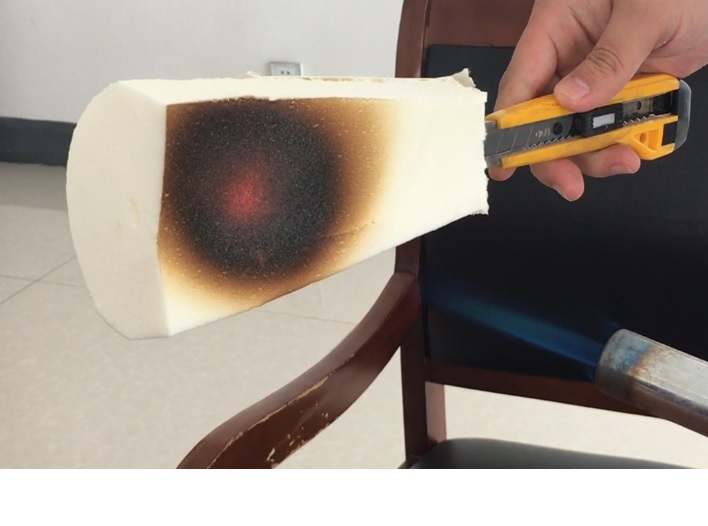
Port-side fire testing is not always possible, but when it is, a small burn demonstration on a cut sample gives the buyer's representative immediate visual confirmation. Either way, the goal is to have the fire performance locked down before the shipment is in transit, not discovered after it's unloaded at the destination.
FAQ
A dependable exporter shows deep knowledge of regional fire safety standards, keeps batch-level documentation ready, and offers technical guidance on loading levels and dispersion. Basic suppliers often just move material, while the better ones can help you adjust formulations when a substrate or processing method changes.
Request third-party test reports for specific halogen content limits, ask about RoHS and REACH compliance status, and check whether the exporter can trace raw material origins. Some suppliers also provide lifecycle data or environmental product declarations, which give more confidence than a generic green label.
The key ones include UL 94 for flammability, IEC 61249-2-21 for halogen-free laminates, EN 45545 for rail applications, and RoHS/REACH for chemical restrictions. The relevant standard depends on the end-use industry, so a knowledgeable exporter should be able to map your product to the correct testing protocol.
Common risks include inconsistent particle size distribution, moisture pickup during long ocean freight, and regional variations in what halogen-free means. A good exporter will specify maximum halogen content per element, provide packaging that prevents humidity damage, and agree on inspection criteria before shipment.
Look beyond price per kilogram. Factor in freight reliability, minimum order quantities, payment terms, technical support response time, rejection rates, and whether the supplier holds safety stock near your production region. A lower unit price can quickly disappear if you have to rework batches or hold extra inventory.
Technical support is often the difference between a smooth switch and a production slowdown. Strong exporters will review your polymer system, suggest optimal loading levels, and help troubleshoot issues like plate-out or reduced mechanical properties. This support should be available before and after the sale, not just during initial qualification.
Yes. Europe tends to emphasize REACH and specific eco-labels, North America focuses on UL and building codes, while parts of Asia may have evolving standards with different test methods. A capable exporter tracks these regional shifts and can supply documentation tailored to your destination market.
Ask about batch-to-batch consistency data, whether they use ISO 9001 or similar quality systems, how they handle non-conforming material, and whether they retain samples for at least two years. Also request a certificate of analysis template to see which parameters they actually measure, such as halogen content, moisture, and particle size.
Conclusion
Procurement teams often treat a halogen-free flame retardant spec sheet as a complete picture, yet those documents rarely capture how the material behaves under real fire load, aging, or processing stress. Regional compliance adds another layer—what passes in one market may trigger red flags elsewhere, and guessing at standards leads to costly delays. Equally important is supplier consistency. A vendor offering the lowest bid might deliver a batch that drifts from the approved formulation, while a steady exporter with tight lot-to-lot control protects your production line from surprise failures.
The price illusion in halogen-free compound sourcing is real: a lower upfront cost can hide higher rejection rates, longer lead times, or hidden freight and testing charges. Building a resilient supply chain means qualifying multiple sources, auditing manufacturing sites, and locking in raw material traceability. Before any shipment leaves port, insist on independent fire performance verification—cone calorimetry, LOI, or UL 94 tests—on the exact production lot, not a lab sample. This kind of discipline turns procurement from a cost exercise into a risk management advantage.
Contact Us
Contact Person: Guohua Wang
Email: [email protected]
Tel/WhatsApp: 8613003442895
Website: https://www.xxflameretard.com