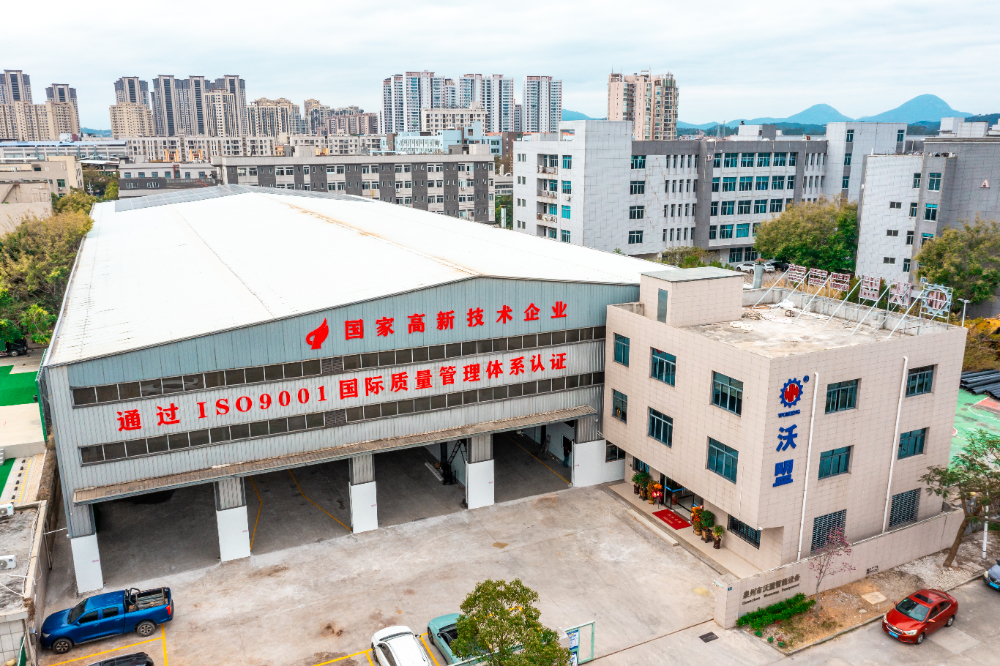

High Speed Baby Diaper Production Line Drives Efficiency in Modern Manufacturing
2026-09-26
In an industry where every second counts, the race to meet soaring demand for baby diapers has never been more intense. Traditional production lines simply can't keep pace with modern hygiene standards and market speed. That's where high-speed innovation steps in. At the forefront, Womeng is redefining what efficiency means in diaper manufacturing. But how much faster can a production line really go without compromising quality? The answer might surprise you. This blog explores the technologies, design philosophies, and real-world results behind high-speed diaper lines that are setting new benchmarks. Whether you're a plant manager or an industry observer, understanding this shift could be the key to staying competitive. Let's dive into the mechanics and mindset driving modern manufacturing forward.
How High-Speed Lines Cut Waste Without Sacrificing Quality
Shifting to high-speed production often triggers fears of sloppy work, but the opposite happens when the line is designed around real constraints. Waste drops because there is less time for material to sit idle, get damaged, or drift out of spec. Operators stop fighting the pace and start relying on precise, repeatable movements—each station becomes a checkpoint where defects are caught instantly instead of downstream.
The quality argument surprises many: faster throughput means deviations show up earlier, not later. A line running at high speed cannot hide a dull blade or a misaligned guide for long, so maintenance issues get solved before they become scrap. This forces a tighter feedback loop. Instead of inspecting finished goods, teams watch the process itself, tuning parameters in real time and cutting the cushion that used to absorb sloppy tolerances.
The result is a leaner operation where speed and consistency reinforce each other. Waste from overproduction, rework, and waiting drops sharply, while quality holds steady or even improves. High-speed lines succeed not by pushing harder, but by removing the slack that allowed small errors to accumulate into big losses.
The Real Reason Faster Diaper Machines Lower Total Cost
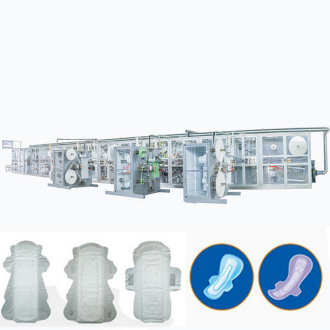
The faster a diaper machine runs, the less time you spend paying for factory floor space, utilities, and labor per unit produced. A machine that churns out 800 diapers a minute instead of 600 doesn't just make more diapers in a shift—it spreads fixed overhead across a larger output, which quietly erodes the cost per piece even before you factor in raw materials. This shift becomes especially visible when you track monthly expenses against production volume, and the gap between average and true cost starts to narrow.
There's also a compounding effect on waste and downtime that rarely gets mentioned in spec sheets. Slower machines force operators to extend shifts or run additional lines to meet demand, which increases the frequency of startups, splices, and material changeovers—each one a chance for defects or scrap. A faster line with higher uptime can hit the same daily target with fewer interruptions, meaning less rejected material and fewer partial rolls left over. That avoided waste, plus the reduced need for overtime or a second shift, is where the real savings accumulate beyond the sticker price of the equipment.
Faster machines also change how you buy raw materials. When you can process a full truckload of fluff pulp or nonwoven fabric in a single day instead of two, you gain leverage on bulk pricing and cut freight costs per ton. Suppliers notice steady, high-volume orders and are more willing to offer better terms or just-in-time delivery that keeps your warehouse lean. Over a year, that turns into lower carrying costs and fewer write-offs for damaged or expired stock, which many buyers overlook until they see the numbers side by side.
Where Automation Meets Baby-Soft Materials
Factories that handle fleece, muslin, and brushed cotton have long struggled with automation because traditional grippers tear or bunch delicate fabrics. The shift came with soft robotics and pressure-sensitive end effectors that mimic the way a parent’s hand supports a newborn’s head. Now a cutting table can guide a blade through twelve layers of bamboo jersey without a single snag, while optical sensors flag loose threads invisible to the human eye.
Beyond the assembly line, this fusion shows up in products like smart bassinets that adjust rocking motion based on a baby’s stirring, using fabric-embedded strain gauges no thicker than a hair. The outer cover remains plush and breathable, yet it hides circuitry that tracks breathing patterns and room temperature. It is a quiet kind of engineering—one that measures gentleness in newtons per square centimeter and refuses to trade softness for precision.
What emerges is not a cold machine wrapped in a soft shell, but a system where automation learns the language of textiles. Stitches relax just enough to keep a seam flat, elastic is guided without overstretching, and each finished piece carries a data trail of pressures and tensions from fiber to fold. The result feels less like mass production and more like an attentive hand that happens to work at 200 units per hour.
Precision Engineering Behind Every Absorbent Layer
Each layer is built from a fiber matrix that is adjusted at the micrometer scale, with pore sizes varying across the surface to steer liquid away from the entry point before it can pool. The top sheet uses a slightly hydrophobic blend to keep moisture from clinging to the skin, while the core beneath is arranged in a spiral density pattern that slows fluid just enough for polymers to lock it in without gel blocking.
Junctions between layers are not simply glued together. A pulsed ultrasonic weld creates a series of micro-anchors that hold the strata in place without adding stiffness or creating channels where liquid could run sideways. This approach also removes the need for solvent-based adhesives, which can interfere with absorbency over time.
Every production batch is checked with a laser profilometer that maps thickness variation to within a few microns. If the surface deviates beyond a narrow tolerance band, the line pauses automatically. That level of inspection is not about catching defects at the end; it is built into the process so each finished layer behaves exactly like the one designed in the lab.
From Raw Pulp to Packaged Packs in Minutes
The journey starts with a thick slurry of wood pulp and water, fed straight into the forming section. Within seconds, the sheet takes shape on a moving wire, loses most of its moisture, and gains enough strength to be handled. There's no waiting around or intermediate storage—the wet web flows directly into the drying and creping stages.
By the time the paper reaches the converting line, it's already thin, soft, and dry. The machine cuts, folds, and stacks it into retail-ready packs without breaking stride. Sensors check the count and seal each pack on the fly, so the product moves from roll to shelf-ready in the same continuous run.
That kind of speed used to take hours with batch processing. Now, the whole sequence—from pulp chest to wrapped carton—happens in under ten minutes. It's less a production line and more a single, uninterrupted motion, tuned to keep the paper moving and the downtime near zero.
Why Modern Plants Are Rethinking Line Speed Limits
For years, line speed was treated as a fixed ceiling: hit the rated number, keep it there, and let everything else adjust around it. That assumption is breaking down in modern plants where product variety, packaging changes, and frequent changeovers make a single speed target feel more like a bottleneck than a benchmark.
Engineers now look at line speed as a variable that should flex with real conditions. Running slower through a fragile container or a tricky label placement can reduce jams and rework, while a short burst above the old limit might clear a backlog without adding real risk. The goal is no longer maximum speed at all times, but the most stable throughput for the current job.
The shift is also driven by smarter sensing and control. Instead of trusting a nameplate rating, teams can watch vibration, torque, and defect data in real time and adjust speed before problems pile up. That turns line speed from a hard rule into a continuously tuned parameter, one that balances output with wear, quality, and operator sanity.
FAQ
The newer lines combine servo-driven modules, automated splicing, and real-time web tension control to reduce downtime and material waste. Many models run at 600 to 800 diapers per minute while keeping reject rates under 0.5%, which is a step change from legacy machines that often top out below 300 per minute.
High speed doesn't have to mean lower quality if the line has inline vision inspection and automatic size changeovers. Cameras check elastic positioning, core placement, and tape tabs at full production speed, so a diaper that passes inspection looks the same as the first one off the line.
Yes, advanced lines use recipe-driven changeovers. Operators select a size on the HMI, and the machine adjusts cutting lengths, adhesive patterns, and elastic tension automatically. A full size change often takes less than 20 minutes, compared to several hours on older systems.
Labor cost per diaper drops because fewer operators are needed for the same output. Material waste also falls through precise glue application and automatic splicing, which can save a mid-sized plant hundreds of thousands of dollars per year. Energy use per unit is typically 15-25% lower than running multiple slower lines.
A single high-speed line generally occupies 30-40% less floor space than two older lines with the same combined output. This frees room for packaging, warehousing, or future expansion. A typical layout might need about 35 meters in length and 10 meters in width including material unwinds and stacker.
Predictive maintenance sensors monitor bearing temperatures, belt wear, and servo loads. When a component drifts outside normal parameters, the line alerts technicians before a failure stops production. Some facilities report unplanned downtime dropping by half within the first year.
The interfaces are usually more intuitive than older relay-based panels, with touchscreens showing live diagnostics. A trained operator can learn to run the line in about two weeks, but maintenance staff need extra training on servo drives and ultrasonic bonding. Most suppliers offer remote support and on-site commissioning.
Manufacturers producing private-label or economy diapers at high volume see the fastest payback, often under three years. Companies facing labor shortages or rising material costs also benefit because the line reduces manual handling and scrap. Even smaller plants can justify the investment if they run 24/7 and need to meet tight delivery schedules.
Conclusion
High speed baby diaper production lines have shifted from simple speed metrics to integrated efficiency. Modern machines now coordinate raw pulp handling, absorbent layer formation, and packaging so tightly that a diaper can move from fiber to sealed pack in just minutes. This isn't about rushing; it's about removing slack. Cutting waste starts at the material interface—real-time sensors adjust glue patterns and trim widths on the fly, so fragile nonwoven and elastic films aren't overstretched or oversprayed. The result is fewer rejects, less scrap, and no trade-off in softness or fit.
The financial case is equally direct. Faster machines lower total cost not because they run around the clock, but because they compress energy, labor, and floor space per unit. A plant that once needed three medium-speed lines can often consolidate into one high-speed system with smarter servo drives and precision roller alignment. Automation here isn't cold or rigid; it handles baby-soft materials with vacuum transfer and low-tension web paths that avoid tearing. Engineers are rethinking line speed limits by treating every layer—acquisition, distribution, core—as a linked system rather than isolated stages. That's how modern manufacturing gets efficiency without losing the gentle touch parents expect.
Contact Us
Contact Person: Jessie Lai
Email: [email protected]
Tel/WhatsApp: 86-188594442931
Website: https://www.wm-machinery.com