

OEM High Frequency External Concrete Vibrator Key Benefits and Selection Tips
2026-10-26
If you've ever watched a form fill with concrete and wondered whether the vibration is actually reaching every corner, you are already asking the right question. The difference between a solid pour and a costly void often comes down to the vibrator you choose. In this guide, we break down the key benefits of OEM high frequency external concrete vibrators and share selection tips that work on real job sites, not just in catalogs. Guangling has spent years refining this equipment, and understanding what to look for can save you from rework, downtime, and unnecessary expense.
Why Wall Forms Respond Better to High-Frequency Consolidation
Concrete placed in wall forms sits inside a narrow vertical cavity, and high-frequency consolidation takes advantage of that geometry. The large, stiff panel faces transmit rapid vibration directly into the mix rather than absorbing it. Because the form is closed on two sides and typically braced with ties, the energy does not dissipate outward as it would in an open slab form. Instead, it bounces between the panels, creating a more uniform zone of agitation that reaches into corners and behind reinforcement.
High-frequency vibrators produce very small amplitudes at thousands of cycles per minute, which suits wall concrete because the thin section does not require deep penetration. The short pulse keeps aggregate particles in motion near the form face, reducing internal friction and allowing paste to fill voids without segregating the mix. Wall forms also respond well because their vertical orientation works with gravity: as vibration fluidizes the top layer, concrete settles downward, and the form confines the movement tightly around the rebar cage.
Compared to bulky column forms or heavily tapered sections, standard wall forms have fewer abrupt changes in cross-section. That continuity allows the vibration wave to travel with fewer interruptions, so the consolidation effort remains consistent from one lift to the next. Contractors often notice fewer surface blemishes and less trapped air at the form face when using high-frequency units on walls, simply because the form geometry amplifies the mechanical energy instead of damping it.
Comparing Electric and Pneumatic External Vibrators on Real Pours
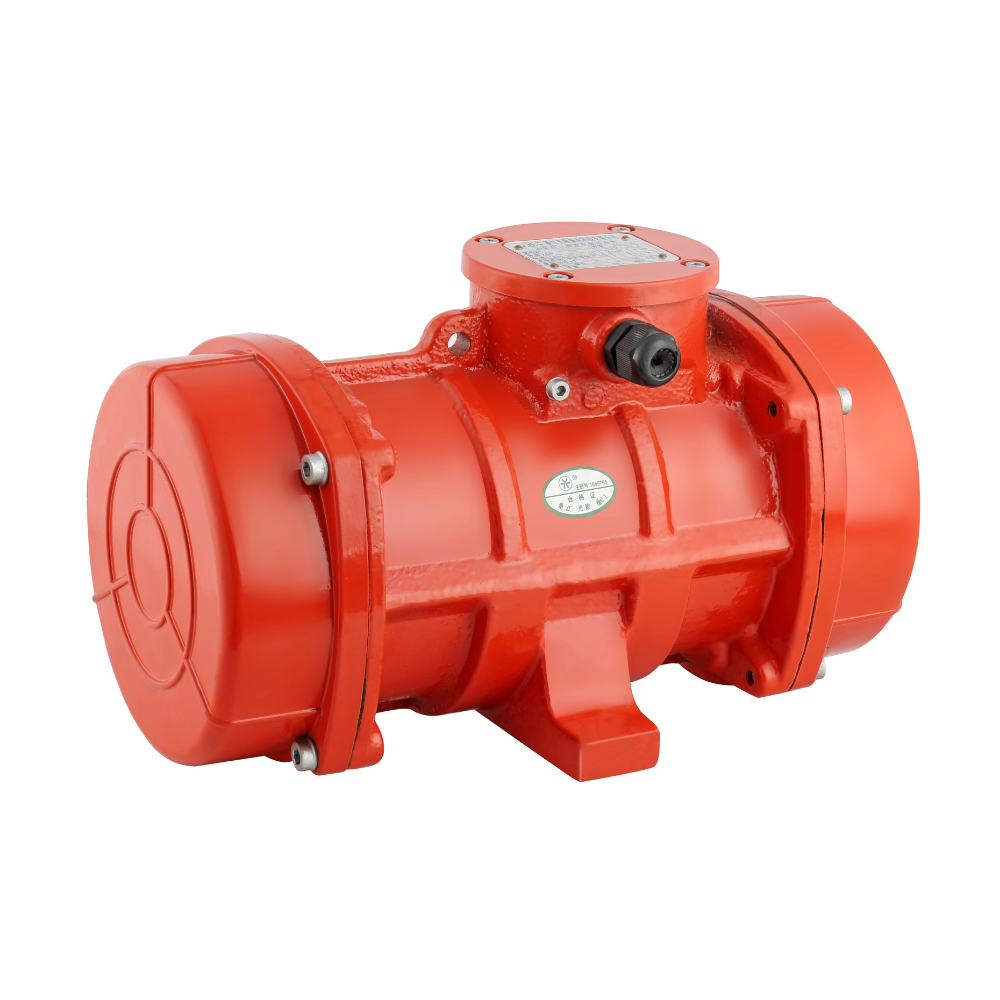
On a real pour, the choice between electric and pneumatic external vibrators often comes down to what the crew can actually sustain for hours. Electric units tend to run quieter and don't need an air compressor chugging away nearby, but you're tied to a power source and any extension cords become trip hazards. Pneumatic vibrators, by contrast, thrive in wet or flammable environments where sparks or shorts would be a serious risk, yet the hiss of compressed air and the weight of airline hoses can wear on operators faster than the vibration itself.
Watching both types on the same slab pour reveals differences in consistency. Electric vibrators usually hold their frequency steady once set, which is great for long, repetitive placements like precast panels or bridge decks. Pneumatic models respond more directly to air pressure adjustments, letting a skilled crew fine-tune amplitude on the fly when a form has tight corners or embedded rebar clusters. The downside is that air pressure can drop if too many tools share one compressor, leading to uneven consolidation unless someone monitors the gauge closely.
Field experience suggests that most contractors don't pick a universal winner. Instead, they match the tool to the pour's constraints: electric for enclosed spaces with grid power and noise limits, pneumatic for outdoor or hazardous areas where portability and safety outweigh efficiency. Some teams even keep both on hand, switching mid-pour if the power supply falters or the compressor gets bogged down.
Reading Manufacturer Specs: What Actually Matters for Your Mix
A flat on-axis frequency response looks great in a brochure, but it won't save your mix if the off-axis behavior is a mess. Most rooms throw a huge amount of reflected energy at you, and if the speaker's directivity changes wildly across the crossover region, you'll end up EQing against a phantom. Check the polar plots or at least the off-axis curves before trusting a ruler-flat line.
Distortion specs are often buried or dismissed, yet they tell you more about midrange harshness than any marketing blurb. A speaker can claim 0.1% THD at 1 kHz while producing 5% third-harmonic distortion at 3 kHz when driven to a realistic mixing level. Ask for distortion curves at multiple SPLs, not just a single number — the high-order harmonics are what make vocals sound gritty and cymbals turn to sand.
Sensitivity and power handling feed the myth of "loud enough," but what actually matters is how the speaker behaves near its limits. A monitor rated for 120 dB peak might compress 6 dB before it gets there, squashing your transient decisions. Watch for thermal compression data or, better yet, listen to the speaker pushed hard with a dense mix. If the snare loses its snap or the low end starts to smear, those max SPL numbers were just decoration.
Avoiding Bracket Fatigue and Bolt Loosening During Continuous Use
Continuous operation puts repeated stress on mounting brackets and fasteners, gradually wearing down threads and contact surfaces. Many overlook the slow creep of fatigue until a bracket cracks or a bolt backs out mid-run, causing vibration, misalignment, or even sudden failure. Simple habits like checking torque values at scheduled intervals and using thread-locking compounds where appropriate can make a noticeable difference in long-term stability.
Bracket design also matters more than it seems. A well-shaped bracket distributes load across a larger area, reducing stress concentrations that lead to cracks near bends or welds. When replacing hardware, opt for bolts with rolled threads and washers that match the bracket material to avoid galvanic corrosion. Adding rubber or nylon washers can dampen micro-movements that slowly loosen nuts without being obvious during routine inspection.
Pay attention to heat cycles as well. Repeated expansion and contraction from operating temperature shifts can relax preload in bolts even if they were properly torqued initially. Marking fastener positions with a paint pen gives a quick visual reference; if a mark drifts out of alignment, you know it's time to re-tighten before the next run. These small, consistent checks keep the assembly tight without requiring constant downtime.
Choosing Frequency and Force Based on Form Stiffness and Concrete Head
The interaction between formwork stiffness and the hydrostatic pressure of fresh concrete dictates a narrow workable range for vibration parameters. Stiff forms tend to reflect energy back into the concrete rather than absorb it, so lower frequencies around 6,000 to 9,000 vibrations per minute often prove sufficient to consolidate mixes with slumps above 100 mm. As the concrete head increases, the pressure gradient changes how bubbles migrate and how quickly the paste liquefies under vibration, which in turn shifts the optimal frequency window downward to avoid over-compaction near the bottom of the lift.
When the form face is relatively flexible, a different strategy emerges. Thin steel plate or plywood panels can amplify certain frequencies and deaden others, producing uneven consolidation if the vibrator operates outside the panel's natural response range. In these cases, matching the vibrator frequency to roughly twice the form's first bending mode helps sustain a traveling wave that keeps the concrete moving without rattling the panel excessively. Field adjustments often involve running a short test pour and watching for localized boiling or dead zones along the form face, then shifting the frequency by a few hundred vpm until the surface motion evens out.
Force selection follows from the same pair of inputs. A high concrete head means the vibrator must overcome greater static friction between particles, so a larger eccentric moment or a longer head immersion time becomes necessary. Yet excessive force on a flexible form can bow the panels outward and create a visible rib pattern on the finished surface. A practical starting point is to reduce the force by 15 to 20 percent when moving from a stiff steel gang form to a lighter aluminum or wood-faced system, then compensate by increasing the immersion frequency of the vibrator head rather than its amplitude. This keeps the form deflection within tolerance while still transmitting enough energy to release entrapped air at the bottom of the placement.
Long-Term Cost per Yard: Energy, Maintenance, and Replacement Intervals
The per-yard price you see at purchase is only the starting point. Over a decade or two, energy costs for upkeep, the time and materials spent on routine maintenance, and how often the surface must be torn out and replaced all add up to a much larger number. A product that looks cheaper on day one can quietly drain your budget if it needs frequent power washing, regular reapplication of infill, or early replacement.
Energy consumption varies surprisingly between surface types. Natural grass demands mowing, edging, and sometimes irrigation pumps—every pass of a mower burns fuel or electricity. Some synthetic options require occasional vacuuming or grooming with powered equipment, but the frequency is usually far lower. Maintenance routines also differ in hidden costs: you may need to buy specialized cleaning agents, rent equipment, or pay for professional services. Replacement intervals then multiply these annual costs. A surface rated for 8 to 10 years will hit you with a full reinstallation expense long before a 20-year product needs attention.
To get a realistic long-term cost per yard, divide the installed price by the expected lifespan and add annual energy and maintenance outlays. For instance, a $14-per-yard surface lasting 9 years with $2.50 in yearly upkeep costs about $4.06 per yard annually. A $22 surface lasting 18 years with only $1.00 in yearly upkeep costs about $2.22 per yard annually—almost half. Those differences come directly from replacement intervals and how much energy the surface demands between installs. Ignoring them means you are not actually comparing costs at all.
FAQ
OEM units are often built to match specific formwork dimensions and power requirements. You get better mounting compatibility, more predictable frequency output, and easier access to replacement parts when the supplier knows your production setup.
For stiff mixes, aim for 10,000 to 12,000 vibrations per minute. That high-frequency action breaks internal friction quickly without waiting for gravity to do the work, which reduces air pockets near the form face.
Look at the formwork thickness and the concrete volume it holds. A thinner steel form may need a lighter vibrator around 300 to 500 pounds of centrifugal force, while heavy precast panels often demand 800 pounds or more. Matching force to form stiffness prevents dull spots.
Bolting directly to an unpainted, flat steel surface is best. Avoid rubber pads or loose brackets because they absorb high-frequency energy. Also spread vibrators evenly so the entire form gets consistent amplitude rather than relying on one strong unit.
Yes, external high-frequency vibrators reduce surface defects like honeycombing and bugholes, especially on architectural precast. They also let you use lower water content, which improves final strength and gives a cleaner finish without extra hand finishing.
Request the exact frequency curve under load, not just the free-air rating. Ask about winding insulation class, bearing type, and whether they can provide a test report matching your form's natural frequency. A good supplier will help you avoid resonance problems.
Keep the cooling fins clear of concrete splatter and check bolt torque weekly. Listen for changes in sound, the high-pitched whine should stay steady. Replace bearings on a schedule before they get rough, because vibration force drops long before total failure.
Conclusion
High-frequency external vibrators change how wall forms respond during consolidation. An OEM high-frequency unit lets you match the mounting pattern and frequency to your specific wall form system, which reduces the guesswork on site. Instead of relying on a few strong blows, the rapid impulses create a tighter contact with the form face and push air out more efficiently, which matters when you are pouring stiff or low-slump mixes. On real jobsites, the electric-versus-pneumatic debate usually comes down to whether you need consistent frequency under load or more flexibility in remote areas. That is why reading manufacturer specs should focus on measured frequency at the vibrator's working point, not just peak centrifugal force.
Bracket fatigue and bolt loosening are rarely caused by the vibrator alone; they often stem from a mismatch between the mounting system and the form's stiffness. If the form face flexes too much, the energy goes into the structure instead of the concrete, so you need to select frequency and force based on both form rigidity and concrete head. Stiffer, well-braced forms can tolerate higher frequencies without losing energy, while taller lifts may require more force to reach the bottom of the form. Long-term cost per yard is less about the purchase price and more about energy draw, how often you replace wear parts, and how many hours you get before a rebuild.
Contact Us
Contact Person: ZHUO
Email: [email protected]
Tel/WhatsApp: 86-576-86320988
Website: https://www.cnguangling.com