

OEM Shaving Foam Maker for Custom Brand Shaving Products
2026-10-31
Most shaving foam suppliers will sell you the same stock formula and tell you it’s yours. That’s not how you build a memorable brand. Wilson takes a different route as an OEM shaving foam maker, working with you on texture, fragrance, lather density, and packaging so the final product feels like it could only come from your line. Whether you're launching a men's grooming startup or expanding an existing range, the details you customize here are what customers remember. The next few sections break down what actually matters when choosing a manufacturing partner—and where most brands leave money on the table.
What Changes When a Shaving Foam Formula Is Built Around Your Skin's Needs, Not Just Cost?
The moment the focus shifts from trimming production expenses to understanding how skin reacts under a blade, everything about the foam's behavior starts to change. Density is no longer just about looking rich in the can—it becomes a functional cushion that keeps the razor from dragging. The lather is engineered to hold moisture longer, preventing that tight, papery feeling that often follows a rushed morning shave. Ingredients once considered optional, like soothing oat extract or skin-identical lipids, move to the front of the formula because they directly reduce redness and micro-abrasions.
Fragrance choices also take a different path. Instead of a heavy, generic 'ocean mist' that masks cheap stabilizers, the scent becomes lighter and shorter-lived, designed not to compete with a moisturizer or aftershave. The foam's pH is tuned closer to the skin's natural range, which means less disruption to the barrier and fewer breakouts for people who shave daily. Even the way the product collapses on the face matters—a slower breakdown gives you time to work, while a formula built for cost tends to thin out too quickly, forcing extra passes and more irritation.
Perhaps the most noticeable shift is in after-feel. A skin-first foam doesn't leave behind a waxy residue that needs to be aggressively scrubbed away. Instead, it rinses clean and leaves the surface calm enough to skip a separate post-shave balm on low-friction days. Over weeks, that translates into fewer ingrown hairs, less patchy dryness, and a shave that feels less like a chore and more like a brief maintenance step your skin actually tolerates.
How to Test a Custom Shaving Foam Before You Commit to a Full Production Run
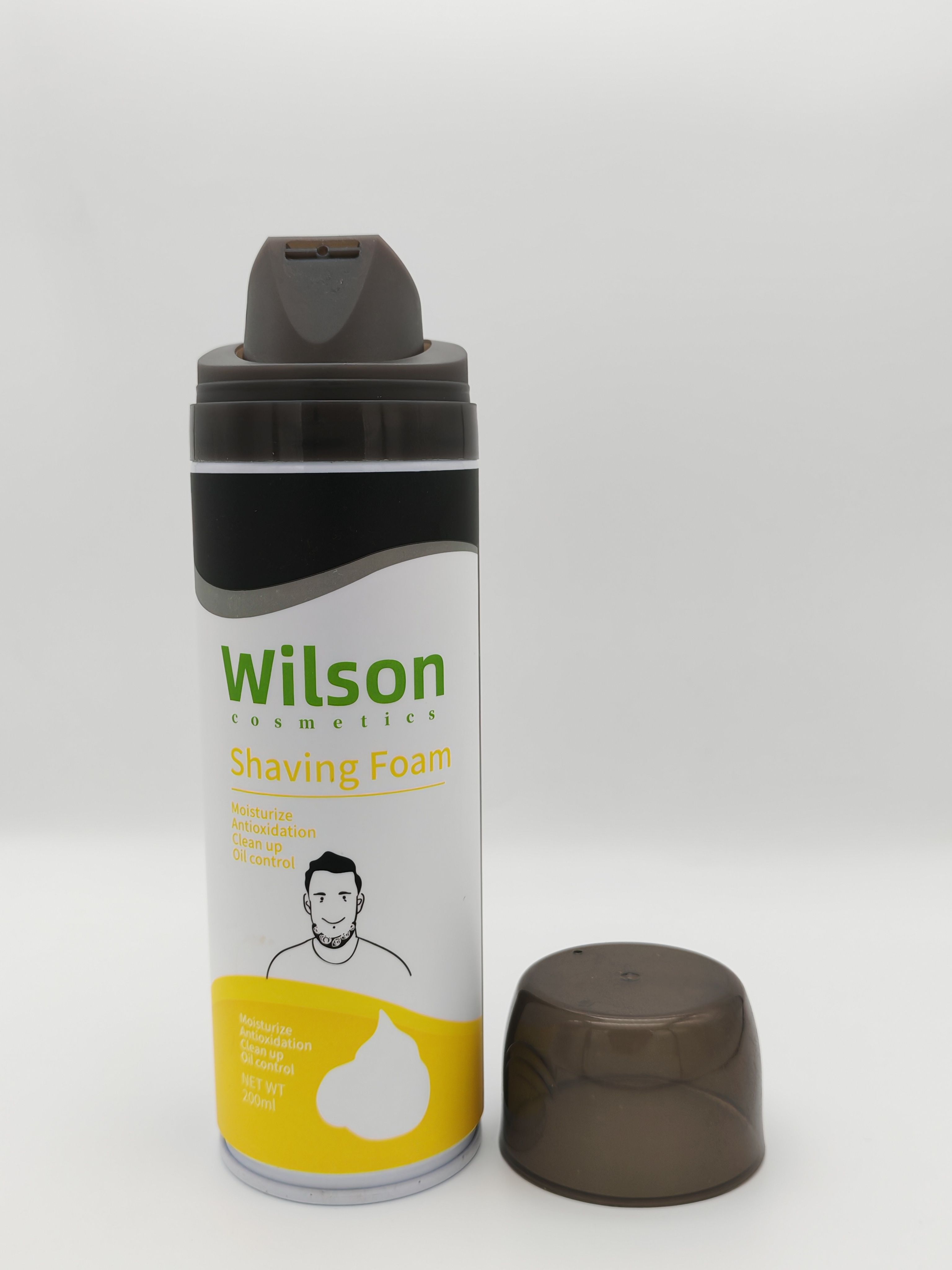
Before locking in a large batch, run a small pilot production with the exact base, fragrance load, and propellant ratio you plan to use at scale. This isn't just about whether the foam feels good on day one. Let the cans sit for two to four weeks at room temperature, then check pressure, spray pattern, and foam density again. A formula can degrade quietly over that window, especially if you've added botanical extracts or switched to a more sustainable surfactant package.
Next, hand samples to a mixed group of daily shavers rather than relying on your own judgment. Ask them to track razor glide, post-shave tightness, and how the foam behaves with both cartridge and safety razors. Pay attention to the edges: does the foam collapse in a hot, steamy bathroom? Does the can clog after sitting unused for a week? Those failure points rarely show up in a quick lab test but will surface fast in real bathrooms.
Finally, test the filled cans through your actual distribution channel, even if it's just a short local run. Temperature swings in a delivery van or a storage shelf can shift internal pressure and alter foam texture. If the can still dispenses smoothly and the fragrance hasn't turned after that journey, you're far more likely to avoid a costly recall once full production begins.
Why Scent Longevity on Skin Is the Real Test for Your Private Label Foam
Most foam formulas smell great in the bottle, but that quick burst means little once water hits your hands. On skin, the fragrance has to survive lathering, pH shifts, and body heat. If a private label foam loses its signature scent within a minute of rubbing, customers won't remember the experience, no matter how pretty the packaging is.
The reason skin is such a demanding test comes down to chemistry. Wet skin is warmer and more acidic than room-temperature air, which accelerates evaporation of top notes and can mute delicate accords. A foam that holds its scent on skin for a noticeable stretch has been built with the right fixatives and a fragrance load that actually fits the base—not just a marketing spritz of perfume oil.
For your private label, this is where you separate a forgettable wash from a signature ritual. Ask your manufacturer for real skin tests, not paper strip results. Have a few people wash with the foam and check how the scent evolves after ten, twenty, and forty minutes. If the dry-down still carries the intended character, you've got a formula that will earn repeat purchases.
The Package Design Detail That Makes a New Shaving Brand Look Established
The first thing you notice isn’t the razor—it’s the dense, uncoated card stock with a faint tooth that catches the light. It feels more like a 1950s apothecary box than a startup’s first run. Then the logo: a single weight of a slightly condensed serif, letterpressed just enough to leave a shadow, not a scream.
There’s no bright orange, no splashy “NEW!” sticker. Just a narrow band of deep burgundy running horizontally across the lower third, the same width as the blade dispenser inside. That repetition of proportion is the tell. A new brand chasing shelf attention would have ignored it; a heritage brand would have used it without saying a word.
What Happens Inside a Real OEM Facility Between Formula Approval and Canned Product
Once a formula gets the green light, the real work shifts to the floor. Procurement pulls the exact ingredient lots from inventory or lines up last-minute deliveries, while QA compares each incoming certificate of analysis against the approved spec. It’s not unusual for a single vitamin premix to be held back until a quick in-house screen confirms potency, since that one delay can ripple through the entire schedule.
On the production side, the first run is often treated as a controlled trial rather than a full-speed batch. Operators weigh out the macro ingredients, then stage the micros and heat-sensitive additives separately so they aren’t sitting on the floor too long. Mixing times, moisture targets, and even the order of addition get recorded by hand or in the batch system, because small deviations here show up later as texture or stability problems in the can.
Once the blend moves into cooking and filling, the pace tightens. Depending on the line, the product may be retorted in-batch or filled hot and sealed before sterilization, with hold times checked against the scheduled process. Samples get pulled at the filler for seam inspections, headspace checks, and pH or water activity readings, and then the pallets are quarantined until micro results come back clean. Only then does the batch get released as finished canned product.
How Low Minimums Let You Launch a Niche Shaving Foam Without Financial Panic
Low minimums turn a risky bet into a series of small experiments. Instead of ordering 5,000 units of an untested lavender-and-cedar formula, you can start with 200 cans. Sell those to a handful of wet shaving enthusiasts, read their feedback, and tweak the lather or scent before committing to more. That means your initial cash outlay might be under a thousand dollars, not tens of thousands. The financial panic that usually accompanies a first production run disappears because you're not betting the rent on a fragrance nobody has smelled yet.
Small batch production also changes how you talk to customers. When you only have a few dozen units of a limited run, scarcity works in your favor without you having to fake it. You can test three different formulas side by side, see which one people actually reorder, and then scale only the winner. This kind of iteration used to be reserved for big labs with deep pockets. Now a one-person operation can do it from a spare bedroom, because the factory isn't forcing you to fill a shipping container just to get a reasonable per-unit price.
And when you're not ordering massive quantities, manufacturers tend to treat you differently. You're not a faceless account number begging for credit terms; you're a curious founder testing a concept. Many small-batch cosmetic labs will walk you through ingredient choices, suggest cheaper alternatives for your base, or even hold your stock for a few weeks while you sort out packaging. That kind of flexibility is worth more than a few dollars saved per unit, because it lets you launch without signing a lease on a warehouse or hiring staff to manage inventory.
FAQ
Look beyond basic production capacity. A reliable partner should offer in-house R&D, flexible minimum order quantities, and a clear communication process. Ask to see samples of previous custom work and how they handle formula adjustments, stability testing, and packaging sourcing. The right maker will treat your brand’s identity as a priority rather than pushing their own standard lines.
Yes, most experienced OEM manufacturers can modify the base to target dry, sensitive, or oily skin by adjusting humectants, emollients, and surfactants. Fragrance is also customizable, from unscented to complex blends. Expect a few rounds of lab samples to fine-tune viscosity, foam density, and post-shave feel before the formula is locked.
You typically have full control over the can design, label artwork, and outer carton. The manufacturer will provide dielines and printing specifications. Some also offer in-house printing, while others work with approved suppliers. Just be aware that can size and valve type need to match the filling line capabilities.
It varies widely depending on the manufacturer and packaging complexity. For fully custom cans with bespoke artwork, MOQs often start around 5,000 to 10,000 units per SKU. If you opt for stock packaging with private labeling, you may find lower thresholds. Always confirm whether the MOQ applies per formula, per fragrance, or per label design.
After you approve the final lab sample and artwork, production usually takes 4 to 8 weeks. This includes sourcing raw materials, filling, curing, quality checks, and packing. If your formula requires special ingredients or the packaging needs new tooling, add another 2 to 4 weeks. A clear timeline should be agreed before purchase orders are signed.
Yes, a good OEM partner will help you navigate cosmetic regulations for your target regions, whether it is the EU, US, or Asia. They can prepare safety assessments, CPSRs, ingredient lists, and allergen documentation. However, final responsibility for product registration and label compliance usually remains with your brand, so plan for extra review time.
Both options are common. Private label means you choose from an existing stable of tested formulas and add your branding. A fully custom formulation involves developing a unique base from scratch, which takes longer and may have higher development fees. Many brands start with private label to test the market, then move to custom once sales are proven.
Standard checks include fill weight consistency, can pressure testing, valve function, foam expansion rate, pH level, and microbial testing. Stability tests under different temperatures are also run to ensure the product holds up over time. Request a detailed QC report with each batch so you have documented proof of quality for your own records.
Conclusion
When you work with an OEM shaving foam maker focused on custom brand products, the real difference starts in the lab. Instead of tweaking a stock base to cut costs, a dedicated partner builds the formula around specific skin needs—whether that means adding extra humectants for dry skin or reducing common irritants for sensitive shavers. Before committing to a full production run, smart brand owners request a small-batch test, checking everything from cushion and glide to post-shave feel. This hands-on phase often includes scent longevity tests on actual skin, because a fragrance that fades in minutes won't build the kind of loyalty a private label foam needs.
Beyond the formula itself, the right OEM partner bridges the gap between approval and finished cans with transparent production steps, from precise blending and propellant filling to quality checks at each stage. Packaging details—like a well-weighted can, a clean label layout, and a nozzle that dispenses consistently—make a new shaving brand look far more established than its startup status suggests. Finally, low minimum order quantities allow niche brands to test a unique foam without financial panic, keeping cash flow flexible while you refine the product and gather real customer feedback.
Contact Us
Contact Person: Simon
Email: [email protected]
Tel/WhatsApp: +86 13267966849
Website: https://www.wilsoncosmetic.com