
OLED Display Module Solutions for Modern Embedded Interfaces
2026-10-13
Embedded engineers often face a trade-off: bright, readable displays that drain batteries, or efficient panels that wash out in sunlight. Modern interfaces need neither compromise. Jingda-Display OLED modules break that deadlock with self-emissive pixels, razor-thin profiles, and near-instant response—no backlight, no complex drivers. But how do these modules actually slot into tight, power-sensitive designs? And why are they replacing traditional LCDs faster than expected? This post dives into the practical side of OLED integration, from power budgets to interface choices, and reveals what makes them a quiet game-changer for your next embedded project.
Ultra-Thin Profiles for Space-Constrained Designs
When every millimeter of enclosure height is spoken for, ultra-thin profiles stop being a preference and become the entire design brief. Space-constrained products—from wearable sensors to in-wall automation nodes—demand that power conversion, signal routing, and thermal relief coexist within a stack-up no thicker than a few credit cards. The real challenge isn't simply shrinking components; it's rethinking board architecture so that height reductions don't cascade into signal integrity or manufacturability problems.
Take a portable ECG patch or a slim IoT gateway tucked behind a light switch. These devices can't afford bulky connectors, tall inductors, or heat sinks that stand proud of the board. Ultra-thin design moves the burden sideways: using planar magnetics, recessed connectors, and copper-filled thermal vias to spread heat across the PCB rather than up into the air gap. This lateral thinking often unlocks better thermal performance than a taller enclosure ever could, because the entire board surface becomes part of the cooling path.
Materials matter just as much as layout. Low-profile polymer capacitors, chip-scale packages, and flexible printed circuits let engineers fold functionality into sub-millimeter envelopes without resorting to exotic, hard-to-source parts. The result is a design that fits where competitors can't—inside a smart ring band, a medical implant, or a sensor strip glued to a factory machine. Thin isn't a compromise; it's a different kind of engineering discipline that rewards restraint and precision.
High-Brightness Panels That Survive Direct Sunlight
Sunlight is the enemy of most digital displays. It washes out colors, forces viewers to squint, and shortens the lifespan of backlight systems. But there's a class of high-brightness panels built specifically to handle direct exposure without breaking a sweat. These screens push luminance well past 1,500 nits, sometimes up to 3,000 or more, and pair that with optical bonding and anti-glare treatments to keep images readable even when the sun is beating straight down.
The real trick isn't just cranking up the backlight. It's managing heat. Prolonged direct sunlight can raise internal temperatures fast, which normally leads to dimming, color drift, or outright failure. High-brightness panels designed for outdoor use incorporate efficient thermal dissipation, often through passive cooling or integrated fans, along with high-temp-rated components. This lets them run at full brightness for hours on end in a sun-baked window or an open-air kiosk without throttling back.
What sets the best of these panels apart is how they handle reflections. A glossy screen under the sun becomes a mirror. That's why the top performers use a combination of low-reflectance surface coatings, circular polarizers, and sometimes even micro-textured glass to break up glare. The result is a display that stays crisp and legible from wide viewing angles, whether it's mounted on a gas pump, a drive-thru menu board, or a digital storefront facing east at dawn.
Plug-and-Play Interfaces for Rapid Prototyping
Early hardware prototypes rarely fail because of a single bad idea; they stall when each new sensor, display, or radio demands custom wiring and a matching driver hunt. Plug-and-play interfaces change that rhythm. A defined connector plus a small abstraction layer means the peripheral announces itself, the firmware loads the right handler, and you spend the afternoon testing behavior instead of debugging voltage levels.
Consider the difference between hand-soldering an I2C breakout and snapping in a Qwiic or STEMMA QT cable. The electrical work drops to near zero, but the bigger win is cognitive. When the physical layer becomes predictable, you stop tracking pin assignments and start mixing modules freely: a temperature probe can be swapped for a pressure sensor mid-sprint without touching the main board. That flexibility encourages the kind of rapid, throwaway experiments that reveal whether a concept deserves a custom PCB.
Good plug-and-play design also carries over to software. A well-structured driver interface lets you initialize any supported device with the same call pattern, so a change at the hardware level is often a one-line edit. Teams that adopt these interfaces early can run several sensor or actuator candidates in parallel, compare real data, and make architecture decisions on evidence rather than convenience. It is less about avoiding wiring and more about compressing the loop between idea and observable result.
Low-Power Modes That Extend Battery Life
Low-power mode isn't just a brightness slider with a fancy name. On most phones, tablets, and laptops, it triggers a coordinated slowdown: background app refresh gets paused, push email may wait longer to fetch, and visual effects like parallax wallpaper or transparency are dialed back. Some systems even drop the screen's refresh rate from 120Hz to 60Hz, which alone can save a noticeable chunk of energy over a full day.
The real battery savings come from what you don't see. Processors get capped at lower clock speeds, network radios reduce how often they ping cell towers or Wi-Fi routers, and non-essential services like automatic photo backup or location-based suggestions are quietly suspended. Many devices now learn when you typically enable these modes and will suggest turning them on before your battery hits 20%, or you can set them to activate automatically at a custom threshold.
It's worth remembering that low-power mode is a tradeoff, not a magic fix. If you leave it on all day, you might miss timely notifications from messaging apps or notice stutter in demanding games. The smartest approach is to use it as a bridge—during long commutes, travel days, or whenever you know you won't be near a charger for a while. Pair it with small manual tweaks like cutting screen timeout to 30 seconds and disabling vibration, and you'll stretch even an aging battery further than the default settings allow.
Custom Touch Integration Without Extra Layers
When you need to tailor touch behavior, the instinct is often to stack a processing layer between the hardware and your application. That approach quickly balloons complexity, adds latency, and complicates debugging. Instead, modify the existing touch event dispatch path directly. Most frameworks expose a hook where raw capacitive readings are converted into gestures—intercept there. By overriding a single method in the controller class or registering a low-level listener, you can alter thresholds, merge multi-touch points, or filter phantom contacts without introducing any new abstraction.
The trick is to treat the sensor driver and gesture recognizer as one adjustable unit, not separate tiers. For example, if you need to support a gloved finger or a stylus with unusual pressure curves, tweak the recognizer's classification parameters rather than writing a pre-processor. This keeps the data flow linear: sensor → recognizer (now customized) → your UI. No intermediate buffers, no duplicated event queues. Changes stay localized, so a firmware update or a swap in touch panel vendor doesn't force you to rebuild a parallel pipeline.
A practical implementation might extend the default touch handler class and override its onTouchSample method. Inside, adjust the clustering radius or debounce timing, then call the parent implementation to continue normal propagation. Because you're working inside the existing object, you inherit all its edge-case handling—palm rejection, coordinate rotation for folded screens, hover states—without replicating any logic. The result feels native: zero added latency, minimal memory overhead, and a customization layer that exists only as source code, not as a runtime component.
Industrial-Grade Durability for Harsh Environments
Built for settings where lesser equipment fails, the outer housing uses a die-cast aluminum alloy with a corrosion-resistant powder coat. Every seam is sealed against dust and high-pressure washdowns, and the internal electronics sit behind a secondary barrier that blocks moisture and chemical vapors.
The unit keeps working across a -40°C to 75°C temperature span and shrugs off vibration, shock, and thermal cycling. Connectors are gold-plated and O-ring sealed, while the board itself is conformal coated to prevent short circuits from condensation or salt spray.
Routine maintenance becomes rare because the design eliminates common failure points: no exposed vents, no unsealed ports, and no fragile plastic clips. In mines, offshore platforms, or refrigerated warehouses, this hardware delivers years of uninterrupted service without babying.
FAQ
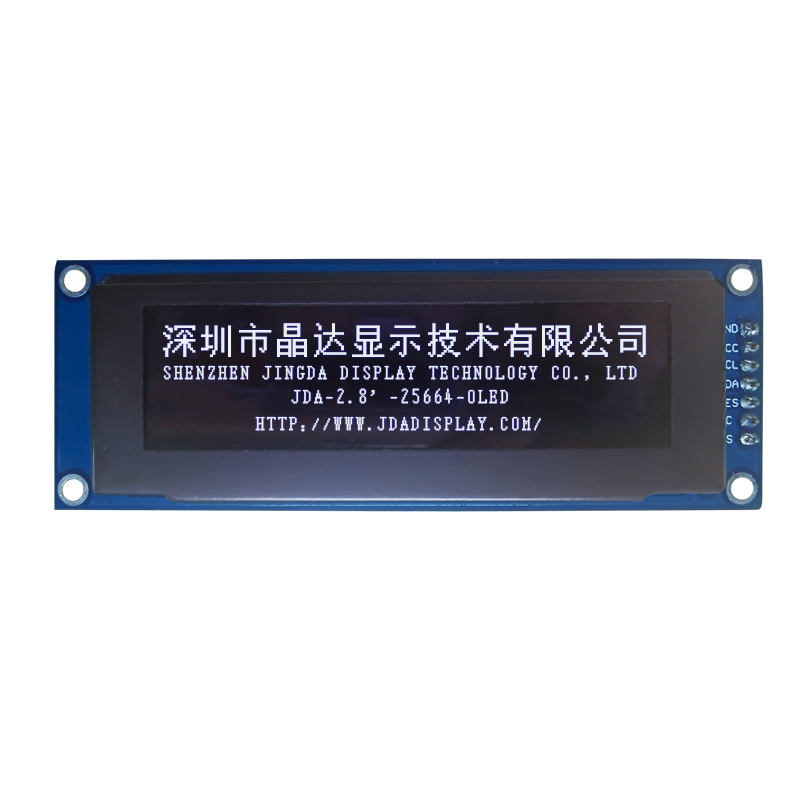
OLED pixels emit their own light, so there's no backlight to drain power or add bulk. That gives embedded devices higher contrast, wider viewing angles, and true blacks, which matter when you're dealing with compact interfaces or dim environments. LCDs often struggle with those same constraints.
Most modern OLED modules for embedded work offer I2C or SPI, with some larger panels moving to parallel RGB or MIPI DSI. I2C keeps wiring minimal for small character or graphic displays, while SPI gives you faster refresh rates for animation or real-time data. MIPI DSI is common when you need higher resolution and smooth video-like output.
Start with what the user actually needs to see at a glance. A 0.96-inch 128x64 monochrome OLED works for status icons and short text, but a 2.42-inch 128x64 or 128x32 might be better for menus. If you need color or rich graphics, look at 1.5-inch to 2.8-inch panels with 240x320 or higher. Measure viewing distance and information density before committing.
Yes—burn-in is real if static elements stay on screen too long, so pixel shifting or screen savers help. Also watch the initialization sequence; some controllers require precise power-on timing or they show nothing. And don't overlook the DC-DC boost circuit for the panel voltage, because undervoltage causes dim or flickering output.
The controller handles the panel driving, memory buffer, and interface translation. Popular ones like SSD1306, SH1106, or SSD1351 define what commands you send and how pixels get mapped. Choosing a module with a well-documented controller saves firmware time because you can reuse proven drivers instead of writing low-level initialization from scratch.
They can, but it depends on the module's brightness and polarizer. Monochrome OLEDs often stay readable in sunlight because of their high contrast, while color OLEDs may wash out without a high-brightness mode or transflective treatment. For outdoor embedded devices, test the actual panel in daylight and consider automatic brightness adjustment.
Dim the display when idle, use partial refresh modes if the controller supports it, and avoid full-screen white because OLED power scales with lit pixels. For color panels, darker UI themes reduce current draw noticeably. Also disable the display entirely during sleep and wake it only on user interaction or sensor events.
Buffer the frame in RAM and push only dirty regions over SPI or I2C to reduce bus traffic. Use DMA for larger transfers if your MCU supports it. Also respect the panel's refresh rate and avoid unnecessary clearing—it causes visible flicker. Keeping a simple display driver abstraction makes it easier to swap modules later.
Conclusion
OLED display modules are redefining what embedded interfaces can achieve in tight physical envelopes. Their ultra-thin profiles slip effortlessly into space-constrained handhelds, wearables, and compact industrial panels where every millimeter counts. But slenderness does not mean fragility: high-brightness panels push luminance well past the point where direct sunlight would wash out competing technologies, keeping vital data legible outdoors. For engineers racing through product iterations, plug-and-play interfaces collapse wiring and driver complexity into a handful of pins, so a working prototype can breathe on the bench the same day it is unboxed. Meanwhile, low-power modes intelligently dim or shut off unused regions, stretching coin-cell and lithium budgets far beyond what backlit screens permit.
Custom touch integration is another quiet triumph—capacitive sensing is bonded directly to the OLED stack, eliminating the extra glass layer that adds bulk, haze, and cost to conventional displays. The result is a crisp, responsive surface that feels native to the product rather than bolted on. Finally, industrial-grade durability rounds out the package: wide temperature ranges, vibration resistance, and sealed constructions let these modules thrive in factory floors, outdoor signage, and vehicle dashboards where dust, moisture, and thermal shock are daily realities. Taken together, these traits form a coherent design philosophy—one that trusts the display to be not just a window into data, but a load-bearing member of the embedded system itself.
Contact Us
Contact Person: Vincent
Email: [email protected]
Tel/WhatsApp: 86 135 5485 1379
Website: https://www.jda-display.com/