

Tire Inner Tube Production Line Vendor Selection Tips for Manufacturers
2026-10-05
A wrong vendor choice for your tire inner tube production line doesn't just waste budget—it quietly erodes throughput month after month. Before you sign off, here are the non-obvious checks that separate reliable suppliers from costly experiments, drawn from AUGU AUTOMATION's floor-level experience.
Ask for a live demo with your own compound, not their standard sample
When evaluating a new instrument or service, it is tempting to sit back and watch a vendor run their perfectly curated standard sample. That demo looks flawless, but it tells you almost nothing about how the system will handle your actual work. Insist on a live demonstration using your own compound, your own matrix, and your own challenging conditions. If a vendor hesitates or tries to steer you back to their standard, treat that as a warning sign. A confident partner will welcome the chance to prove performance on your real samples.
Bring the compound that has always given you trouble, not the easy one. Maybe it is sticky, light-sensitive, or prone to degradation. Maybe it requires a specific solvent or temperature range that is outside the vendor's comfort zone. A live demo with your own material reveals the true limits of the equipment and the technical skill of the support team. You will quickly see whether the results match the polished data in their brochure or whether the reality falls short.
Do not accept a recorded video or a pre-run batch as a substitute. You need to watch the process happen in real time, ask questions as issues arise, and see how the team troubleshoots. Your compound, your method, your acceptance criteria. That is the only way to know if the system will earn a place in your lab.
Check how the line handles butyl tube splicing at high cycle rates
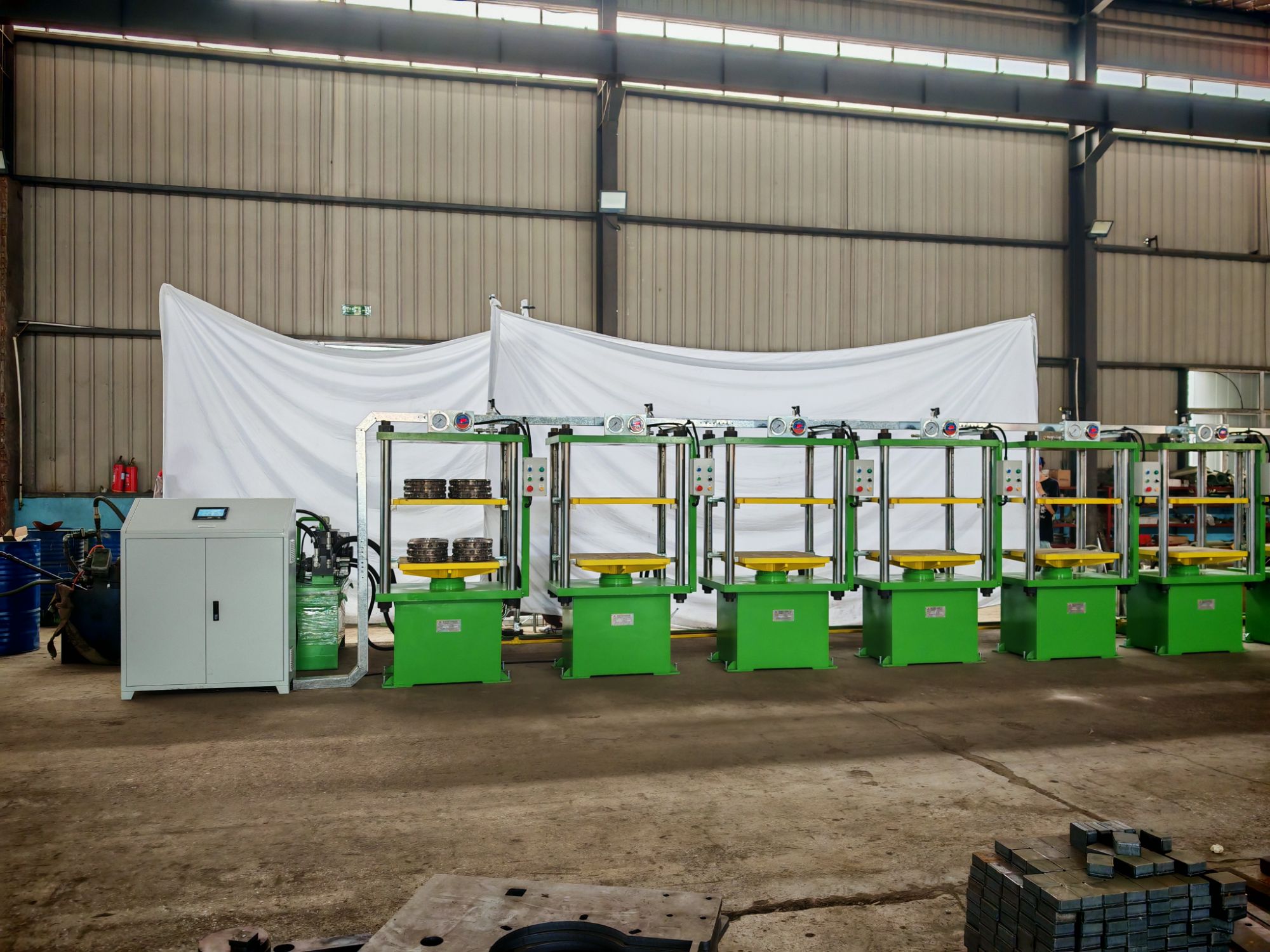
High cycle rates put real stress on butyl tube splicing because the material's tacky, viscoelastic nature leaves little room for dwell time errors. Watch the splice station during sustained runs—if the clamp pressure or heating profile drifts even slightly, you'll start seeing thin tails at the joint or uneven bead thickness that only shows up after a few hundred cycles. On well-tuned lines, the splice jaws keep a consistent bite depth and release timing, so the butyl doesn't smear or stick to the tooling when the line speeds up.
When cycle times drop below a certain point, the usual failure isn't the splice itself but the cut-to-length step feeding it. A short blank or a delayed strip-off can force the splice head to fire early, leaving a weak overlap that passes a slow-speed pull test but fails later under inflation. Some machines address this with a small buffer zone or a momentary hold on the transfer arm, letting the splice complete without yanking the tube forward. If you're running flat-out, pay attention to scrap ejection too—stray butyl fragments near the anvil are a common cause of intermittent bad splices that only appear at high throughput.
Verify the vendor's experience with integrated leak testers and valve fitting
When a vendor claims familiarity with integrated leak testers and valve fitting, don't settle for a brochure bullet point. Ask for the name of the last three production lines where they paired a mass flow leak tester with a solenoid valve manifold. A supplier who can pull up torque specs from a six-month-old installation—without checking a folder—usually knows the difference between a seat leak and a threading issue.
Request a live demonstration or a recorded teardown of a valve assembly they built for a similar pressure range. Watch how they handle the transition from the leak test port to the fitting. Do they use a calibrated orifice for verification, or do they rely on soap bubbles? The latter may work for a garden hose, but not for a 3-bar pneumatic circuit.
Probe their troubleshooting history. Integrated systems fail in predictable ways: a slow leak at the NPT joint, a tester drift after 10,000 cycles, a valve seat that won't hold vacuum. A seasoned vendor will mention these without prompting because they've fixed them. If their answer stays at the level of 'we follow ISO 9001,' keep looking.
Compare real changeover time between tube sizes, not theoretical minimums
The numbers on a spec sheet rarely match what happens on the floor. A 4-inch tube might theoretically change over in eight minutes, but throw in a sticky product residue, a hard-to-reach clamp, and an operator who’s new to the line, and you’re looking at twenty-five before the next run even starts. Smaller sizes often feel quicker because the parts are lighter and easier to manhandle, but that advantage disappears when the fill head needs a different set of change parts and the upstream conveyor has to be re-guided.
Watching real changeovers side by side tells you more than any equipment manual. Moving from a 50ml to a 100ml tube might only add two minutes in theory, but if the larger size forces a hopper swap and a longer purging cycle, the actual downtime can triple. That’s the kind of gap you only catch by timing the crew through several shifts, not by trusting the best-case scenario printed in a brochure.
Film a changeover and measure from the moment the last good tube exits to the moment the first good tube of the next size is accepted. You’ll quickly see which transitions hide extra steps—like recalibrating the sealer for a different diameter or clearing jams caused by a slight mismatch in guide rails. Those details never make it into theoretical minimums, yet they dictate whether your line runs at 60% or 85% efficiency.
Demand a five-year spare parts and wear item cost projection
A machine that looks affordable on day one can quietly drain your maintenance budget once the warranty fades. That is exactly why the request for a five-year spare parts and wear item cost projection should be non-negotiable. Without it, you are guessing at the price of belts, filters, seals, cutting edges, hydraulic hoses, and other consumables that will need replacing long before the equipment is retired.
Ask the supplier to break down projected costs by year, not just give a lump sum. This forces them to reveal whether certain components are expected to fail early, whether wear items are unusually expensive, and whether parts availability will become a problem after the initial purchase. Two machines with similar sticker prices can end up thousands apart once projected replacement costs are laid side by side.
Make the projection part of the written quotation or tender response. If a vendor hesitates, treat that hesitation as a signal. A confident supplier should already know the service intervals, typical wear rates, and regional parts pricing well enough to commit to a realistic five-year figure.
Visit a reference factory running the same shift pattern and output level
Walking through a facility that mirrors your own shift structure removes the guesswork from benchmarking. You get to see how crews hand over between rotations, where minor bottlenecks surface under identical time pressures, and which daily rituals actually stick when output targets match yours. The value isn't in copying a perfect system—it's in noticing the small, unglamorous adjustments that keep a familiar schedule from breaking down.
Pay attention to the unscripted moments: what happens during the last fifteen minutes before a shift change, how supervisors redistribute tasks when someone calls in sick, or where materials are staged to cope with peak-hour rushes. These are the details that never appear in standard operating procedures but make a real difference when you're running the same numbers on the same clock.
After the visit, resist the urge to overhaul everything at once. Pick one or two practices that feel immediately transferable to your floor—maybe a simplified handover checklist or a different way of sequencing break times—and test them quietly for a few weeks. The best takeaways from a reference factory often hide in plain sight, and they only prove their worth once they're adapted to your own crew's habits.
FAQ
Look beyond the brochure. Ask for detailed specs on extrusion consistency, splice strength, and curing uniformity. A vendor who can walk you through how their line handles fluctuations in rubber compound viscosity is worth more than one who only quotes cycle times.
Request a live or recorded run using your own compound, not their demo material. Pay attention to reject rates at the splice and valve stem areas. Also ask for references from plants running similar daily volumes, and call them.
Rarely. Lower upfront cost often hides thinner frames, less precise temperature controls, or limited PLC logic. Calculate total cost per tube over five years, including downtime and scrap. A mid-priced line with better sensors and modular design usually wins.
It can make or break your ramp-up. Find out if the vendor stocks critical spares locally, offers remote diagnostics, and how quickly a technician can be on site. Ask for a written response-time commitment and check with existing customers whether they honor it.
Very. Tire inner tubes come in many sizes, valve types, and rubber formulations. A vendor that only offers a fixed layout may force you to compromise on your product range. Look for one willing to adjust extruder head design, curing molds, or cooling length to your specific tube dimensions.
Vague answers about past installations, no in-house control system expertise, or a reluctance to share a detailed bill of materials. Also be wary if they promise delivery in half the industry average time without explaining how they manage that.
Absolutely. Inspect how they assemble and test machines, not just the showroom. Watch for cable management, weld quality, and whether they run a full line before shipping. A messy build floor often translates to messy on-site installation.
Ask for documentation on emergency stop circuits, fume extraction compatibility, and energy consumption per tube. Verify that the control panel complies with relevant electrical codes for your region. A good vendor will offer a pre-delivery safety audit report without being pressed.
Conclusion
Selecting a vendor for a tire inner tube production line requires pushing beyond the glossy demo. Instead of accepting their standard sample, ask for a live run with your own compound—rubber recipes vary enough that a machine that handles their easy stock may struggle with your formulation. While the line is running, focus on how it handles butyl tube splicing at high cycle rates. That is where many systems jam or lose precision. Also verify the vendor's track record with integrated leak testers and valve fitting; these operations are too often sold as afterthoughts, but a line that cannot test and fit valves inline will force you into slower offline work.
Ignore theoretical changeover times. Have the vendor demonstrate a real size swap, tools in hand, from one tube size to another, and measure the downtime yourself. Hidden costs show up in spare parts too, so demand a five-year projection for spares and wear items, not just the initial purchase price. Finally, do not skip the reference visit. Go see a factory that runs the same shift pattern and output level you plan to run, not a lightly loaded demonstration site. That reality check tells you whether the line holds up under your exact production rhythm.
Contact Us
Contact Person: Lareina
Email: [email protected]
Tel/WhatsApp: +86 17561696737
Website: https://www.auguauto.com/