

Top Sewer Line Cleaning Machine Manufacturer in China for All Your Drain Cleaning Needs
2026-09-23
If a backed-up sewer line has ever thrown off your entire day, you already know why equipment quality matters. AMJET has earned its place as a top sewer line cleaning machine manufacturer in China for all your drain cleaning needs—not by cutting corners, but by building machines that start fast, clear deep, and handle daily abuse. From residential grease clogs to tough municipal line maintenance, AMJET’s drain cleaning systems give contractors the torque and control to get the job done. Here’s what to know before you choose your next machine.
What Sets a Leading Chinese Sewer Cleaning Machine Builder Apart
A leading builder stands out by spending serious time on real job sites before finalizing a design. Their engineers shadow municipal crews and industrial maintenance teams, noting pipe diameters, common blockages, and how operators actually handle equipment under pressure. Those observations feed directly into frame geometry, hose routing, and control placement—so the machine feels familiar on day one instead of forcing workers to adapt to an imported layout.
Vertical control over core components makes another clear difference. Instead of assembling off-the-shelf pumps, nozzles, and reels from various suppliers, the best manufacturers produce these in-house or through tightly managed partnerships. That allows them to hold tighter tolerances, swap materials quickly when a batch underperforms, and build custom configurations for unusual pipe profiles without months of delay.
Service depth often separates a dependable partner from a simple vendor. Leading builders maintain regional parts hubs and train their own field technicians, but they also invest in operator education—teaching crews how to match nozzle types to blockage conditions and when to schedule preventive maintenance. That practical support keeps machines running longer and turns first-time buyers into long-term repeat customers.
Matching Machine Types to Drain and Pipe Conditions
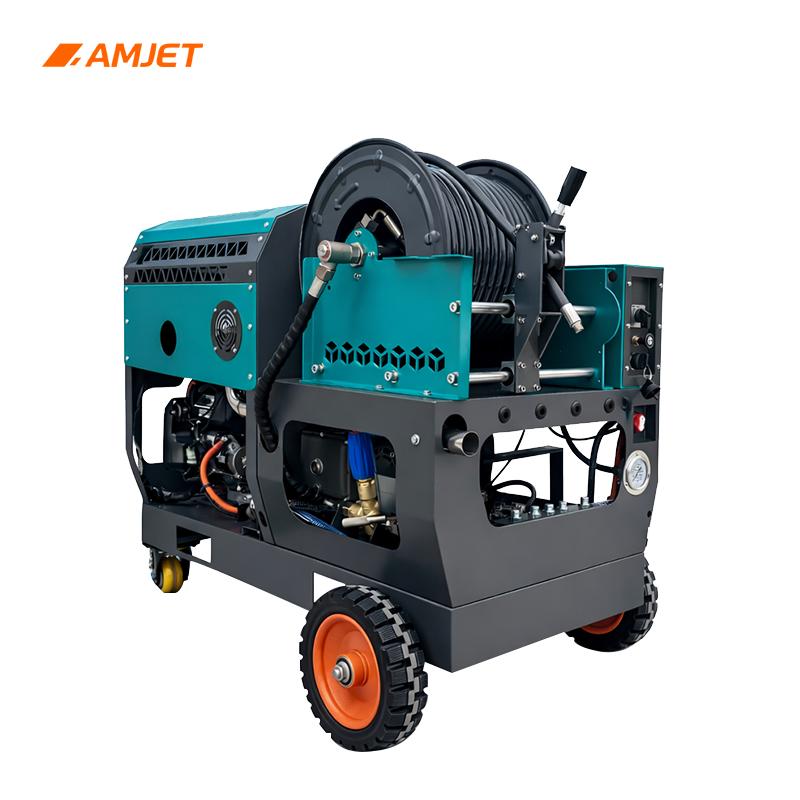
Drain and pipe conditions dictate far more than the initial diagnosis—they shape which machine will actually get the job done without causing further damage. A narrow galvanized pipe from the 1960s reacts differently to high-pressure water than a modern PVC line, and a machine that works wonders on a grease-clogged restaurant drain might be useless on a root-infested clay sewer lateral. Before choosing equipment, look closely at the pipe's inner diameter, the material it's made from, and the type of blockage or buildup you're facing. This small step prevents cracked lines, jammed cables, and costly repeat visits.
For tight bends, fragile joints, or smaller diameter lines, a sectional drain machine with the right cutter often outperforms a bulky continuous rodder. It offers more control when navigating old cast iron or clay with offset joints. On the other hand, a high-flow hydro jetter shines in larger diameter mains or pipes with heavy sludge, scale, or grease coating the walls—provided the pipe structure can handle the pressure. If the pipe is already compromised, soft water pressure with a lower PSI and a root-cutting nozzle might be the safer path than aggressive mechanical scraping.
Don't overlook the condition of the line's access points and the surrounding environment. A machine that's perfect for a clear, straight run may be impossible to position in a crawl space or behind a water heater. In those situations, a compact, variable-speed drum machine or a portable jetter with a short hose reel can be the difference between a finished job and a frustrating afternoon. Matching the machine to both the pipe's condition and the physical workspace keeps the project on schedule and reduces the odds of a callback.
Build Quality and Safety Features That Hold Up on the Job
The frame starts with reinforced steel gussets at every stress point, not just the obvious corners. Weld seams are double-passed and then coated with a zinc-rich primer before the powder topcoat, so moisture doesn’t sneak in where the paint looks fine from outside. On a real job site, that’s the difference between a rig that still opens after a season of road salt and one that’s rusted shut.
Safety isn’t a checklist sticker here. The latching mechanism uses a two-stage catch that holds even if the first pawl gets knocked loose by a shifting load. Anti-slip tread plates are punched, not glued, and they stay grippy with mud or diesel on your boots. Guards around pinch points are deep enough that a gloved hand can’t casually wander in.
Drop tests and vibration rigs get mentioned in marketing, but what matters is how it behaves in the back of a service truck at highway speed. The hinge pins are oversized and greasable, so the door doesn’t sag after two thousand miles of washboard. Every pivot has a replaceable bushing, not a welded-on afterthought.
How Local Manufacturing Keeps Costs and Lead Times Manageable
Local manufacturing keeps costs in check by removing the layers of expense tied to global shipping. Freight charges, import duties, and customs brokerage fees either shrink or disappear, and that savings flows straight into unit pricing. Sourcing materials from nearby suppliers also means smaller, more frequent deliveries—so you’re not tying up cash in warehouse space for inventory you won’t sell for months.
Lead times drop for a simple reason: the factory isn’t an ocean away. When a design needs a tweak or a supplier sends the wrong component, you can send someone to the floor that afternoon. Prototypes and first articles get approved in days rather than weeks, and production schedules flex around actual demand instead of a shipping calendar. That agility prevents the costly habit of over-ordering to avoid stockouts.
There’s also a quiet financial benefit in contract flexibility. Local shops are often willing to start with a small run, let you test the market, and then scale up if the numbers make sense. That reduces the upfront capital risk and keeps your cash available for marketing or customer support—areas that actually drive growth—rather than locking it into a container load of inventory that might arrive late or out of spec.
Real-World Performance in Restaurants, Municipalities, and Industrial Plants
In restaurants, the real test of performance comes during the Friday dinner rush. A dishwasher that works fine at 3 p.m. might choke at 7 p.m. when every rack is loaded to capacity and the water pressure drops. Grease-laden air coats sensors and keypads, and floors get wet from constant mopping. Equipment that survives here is designed with sealed controls and components that can be hosed down. The staff won't tolerate a device that needs rebooting mid-service, so uptime isn't a metric—it's a survival requirement.
Municipalities add a different layer of demands. A pump station controller may sit in an unheated cabinet during a January cold snap in Minnesota, then bake in a metal box in Arizona by July. Maintenance crews often rotate, so the interface has to be understandable to someone who touches it twice a year. Vandalism and power surges are part of the landscape, not rare events. Real-world performance here means logging data for months without a single gap, and surviving a lightning strike without frying the main board.
Industrial plants push equipment to its physical limits over decades. Conveyor motors run twenty-four hours a day, often in dusty or corrosive environments that get into every connector. Vibration from nearby presses can shake loose poorly crimped wires, and temperature swings inside a foundry exceed what most consumer electronics ever see. The equipment that earns a place on these floors is tested not in a lab, but on a Tuesday at 2 a.m. when the line is running at full speed and nobody has time to stop for a firmware update.
Questions to Ask Before You Choose a Sewer Line Cleaning Machine Supplier
Before you sign anything, ask how the supplier handles breakdowns after the sale. Have them walk you through what happens when a cable snaps mid-job or a drum jams. A supplier who hesitates on those details will leave you stranded later. Ask if they stock common wear parts locally or if every order waits on a slow boat.
Find out who actually answers when you call. Will you get a person who has run a sewer machine, or a call center reading from a script? The best suppliers can tell you which drum works in old clay pipe versus PVC and why a particular chain knocker eats cables. That kind of hands-on knowledge separates a partner from a box shipper.
Ask about training and return policy in plain terms. Can your crew test the machine on a real job before you commit? What is the cost if it comes back scratched but works fine? If they cannot give straight answers without burying you in fine print, keep looking.
FAQ
They run their own casting workshop and CNC machining center, so key components are made in-house rather than outsourced. Every machine goes through a loaded test before packing, and their drum guards are shaped to stop the cable from scraping pipe walls during fast retrieval.
Yes. Engineers tweak drum speed, cable diameter, and cutter head configuration based on pipe size, number of bends, and the kind of blockage. One recent municipal order involved a heavy-duty unit built for 600 mm pipelines.
Motors include thermal protection, cables use high-carbon steel with anti-corrosion treatment, and frames go through vibration aging to reduce stress. Each unit ships with an emergency stop button and a leakage-protection plug as standard.
There is a two-year warranty, and wear parts like cutters and belts are included in a spare kit. Video call guidance for installation and troubleshooting is usually arranged within 12 hours. On-site training by an engineer can be booked in advance.
Yes, they make handheld and backpack-style drain cleaners weighing around 12 kg. They work well for kitchen sinks, bathroom floor drains, and similar small pipes. Cable lengths of 15 and 25 meters are available, and the motor speed is adjustable.
Cables are made from oil-quenched high-carbon spring steel. Cutter heads come in different shapes for root intrusion, grease buildup, or hard sediment. The heads are replaceable and made from tool steel with localized quenching.
Standard models are usually in stock and can ship within 7 to 10 days. Customized machines need about 15 to 20 days for production and testing. Shipments leave from Shanghai or Ningbo, and the factory can help arrange LCL or FCL loading.
Sample orders and trial orders are welcome, and you can order just one unit. Bulk pricing is available for larger quantities, but there is no forced high MOQ, which is not always the case with other factories.
Conclusion
China’s leading sewer line cleaning machine manufacturers distinguish themselves through a deep understanding of field conditions rather than just catalog specs. They build machines that match the actual pipe diameters, blockages, and access points found in restaurants, municipal lines, and industrial plants. You see it in the frame rigidity, hose reel design, and drum torque, not marketing copy. Safety features like thermal overload protection, grounded controls, and emergency stops are not add-ons but standard because crews work in wet, cramped spaces. Local manufacturing keeps replacement parts in stock and lead times short, often shipping within days instead of months. That operational closeness means a blocked grease trap or root-filled lateral gets a quicker fix, which matters more than a glossy brochure.
Before choosing a supplier, ask about their test protocols under real load, not just pressure ratings. A good builder will talk about hose flexibility in cold weather, drum bearing seals against grit, and how the frame handles being dragged across a parking lot. They will also have case histories from facilities similar to yours, with honest numbers on clearing time and downtime. The best Chinese manufacturers combine heavy-gauge steel, locally sourced components, and design revisions based on feedback from drain techs who use the machines daily. That loop of field input and fast production is why a well-chosen sewer machine from China keeps your drains clear without the premium price of imported brands, and without sacrificing the reliability your crew depends on.
Contact Us
Contact Person: Mike
Email: [email protected]
Tel/WhatsApp: +86 19545555505
Website: https://www.amjeting.com/