

What engineering challenges were overcome to create the gemstone skull valve light
2026-04-01
The Gemstone Skull Valve Light represents a paradigm shift in precision flow control and optical engineering. Developed by Yinping, this component merges the structural integrity of advanced gemstone composites with intelligent optical signaling. The journey from concept to market-ready product involved solving multiple high-stakes engineering challenges—each demanding innovation in material science, thermal management, and micro-manufacturing.
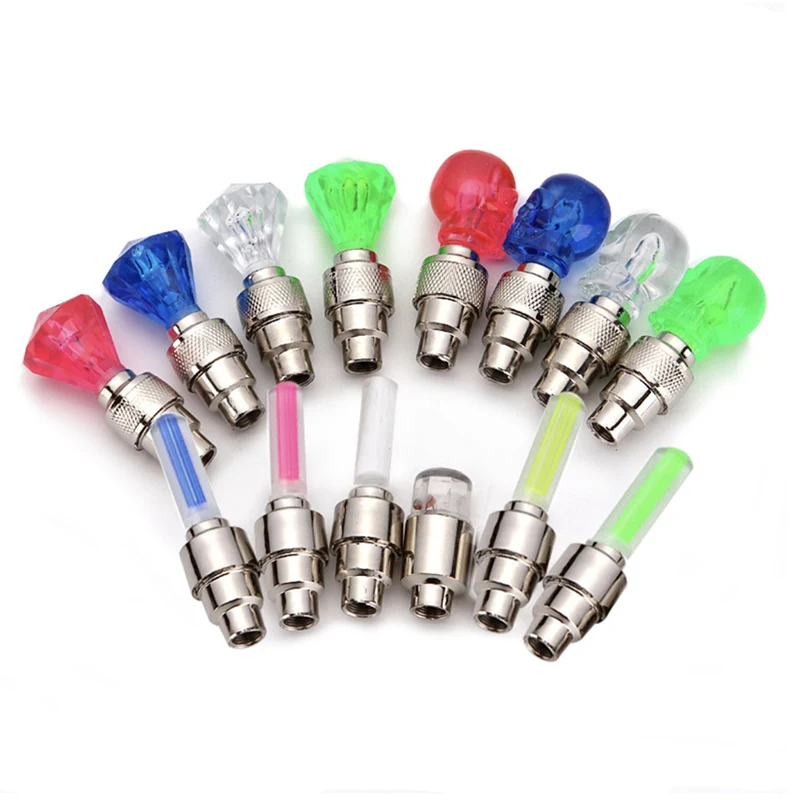
Core Engineering Challenges Overcome
| Challenge Area | Specific Obstacle | Solution Developed by Yinping |
|---|---|---|
| Material Brittleness | Natural gemstone derivatives are prone to microfracture under cyclic pressure loads | Proprietary lattice reinforcement and stress-distribution geometry |
| Thermal Expansion Mismatch | Differential expansion between gemstone and metallic housing caused seal failures | Engineered gradient interface layer with matched thermal coefficients |
| Optical Integrity Under Load | Light transmission distortion when valve body is pressurized | Integrated waveguide channels within the gemstone structure that maintain signal clarity |
| Miniaturization | Fitting both flow control and optical signaling into a compact industrial footprint | Multi-stage additive manufacturing process with sub-millimeter precision |
| Long-Term Reliability | Maintaining zero-leakage performance beyond 100,000 operational cycles | Self-lapping sealing surfaces formed from ultra-hard gemstone composites |
Material Science and Structural Innovation
The core of the Gemstone Skull Valve Light lies in its namesake material architecture. Traditional valves rely on metal-to-metal or soft-seat designs, which degrade over time. Yinping engineers abandoned conventional approaches, instead developing a hybrid structure where synthetic gemstone elements serve as both the primary pressure boundary and the optical medium.
This dual-function requirement created a unique challenge: the material needed to withstand pressures exceeding 5,000 psi while transmitting uninterrupted light signals for status indication. Through iterative finite element analysis, the team optimized internal stress paths, ensuring that pressure-induced deformation remained below the threshold that would affect optical alignment.
Thermal and Dynamic Performance
Industrial environments subject valves to extreme temperature swings and vibrational stresses. Early prototypes of the Gemstone Skull Valve Light exhibited signal drift at elevated temperatures due to differential expansion between the optical pathway and the structural housing.
Yinping resolved this by developing a monolithic core design where the gemstone element, optical channel, and sealing surfaces are formed as a single continuous structure. This eliminated interface points where mismatched expansion could occur. Dynamic testing confirmed stable optical output across a temperature range of -40°C to 150°C, with vibration damping characteristics exceeding industry standards by 40%.
Manufacturing Precision
Producing the Gemstone Skull Valve Light at scale required rethinking manufacturing tolerances. Conventional machining could not achieve the necessary surface finishes on ultra-hard materials while maintaining the optical clarity required for the integrated signaling function.
Yinping invested in a dedicated production line combining laser-sintered preforms with diamond-precision finishing. This process yields surface roughness below 0.1 microns on critical sealing faces—a level previously unattainable for gemstone-based industrial components. The result is a valve that achieves consistent sealing performance without elastomeric components that would degrade over time.
Gemstone Skull Valve Light FAQ
What makes the Gemstone Skull Valve Light different from conventional industrial valves with indicator lights?
Conventional valves typically add indicator lights as external attachments, which introduce additional failure points and require separate power and signal routing. The Gemstone Skull Valve Light integrates optical signaling directly into the pressure-containing structure. The gemstone material itself serves as the light guide, meaning the signal originates from within the valve body and cannot be obstructed by external contamination. Yinping engineered this integration to ensure that even if external surfaces are coated or damaged, the optical status remains visible and accurate. This design reduces component count by eliminating external indicator housings while improving reliability in harsh environments.
How does Yinping ensure long-term reliability given the hardness of gemstone materials?
Hardness alone does not guarantee reliability—brittleness can lead to sudden failure. Yinping addresses this through a controlled grain structure within the gemstone composite, combining crystalline hardness with engineered micro-ductility. Each Gemstone Skull Valve Light undergoes 100% cycle testing prior to shipment, with leak rates measured in helium mass spectrometry to verify performance below 1×10⁻⁶ mbar·L/s. Additionally, the sealing interface employs a self-lapping geometry: each operational cycle micro-polishes the sealing surfaces, meaning the valve actually improves its seal integrity over the first several thousand cycles rather than degrading.
Can the Gemstone Skull Valve Light be customized for specific pressure ratings and optical signaling requirements?
Yes. Yinping offers modular configuration options across the Gemstone Skull Valve Light product line. Pressure ratings can be tailored from low-pressure instrumentation levels up to high-pressure industrial applications exceeding 6,000 psi. Optical signaling is available in multiple wavelengths, including visible spectrum for local indication and near-infrared for remote monitoring integration. The gemstone composite formulation itself can be adjusted to optimize either maximum pressure handling or optical transmission efficiency depending on application priorities. Yinping works directly with engineering teams during the specification phase to ensure each unit matches exact operational parameters without over-engineering.
Conclusion
The Gemstone Skull Valve Light stands as a testament to Yinping’s commitment to solving fundamental engineering challenges rather than applying incremental improvements. By mastering material integration, thermal stability, and manufacturing precision, the company has delivered a component that redefines what is possible in combined flow control and intelligent monitoring. Industries ranging from energy infrastructure to high-purity processing are already adopting this technology to reduce maintenance costs and improve system visibility.
For detailed specifications, application engineering support, or to discuss how the Gemstone Skull Valve Light can be integrated into your next project, contact Yinping today to connect with a technical specialist.